
MARBLEHEAD — Every day is a gift.
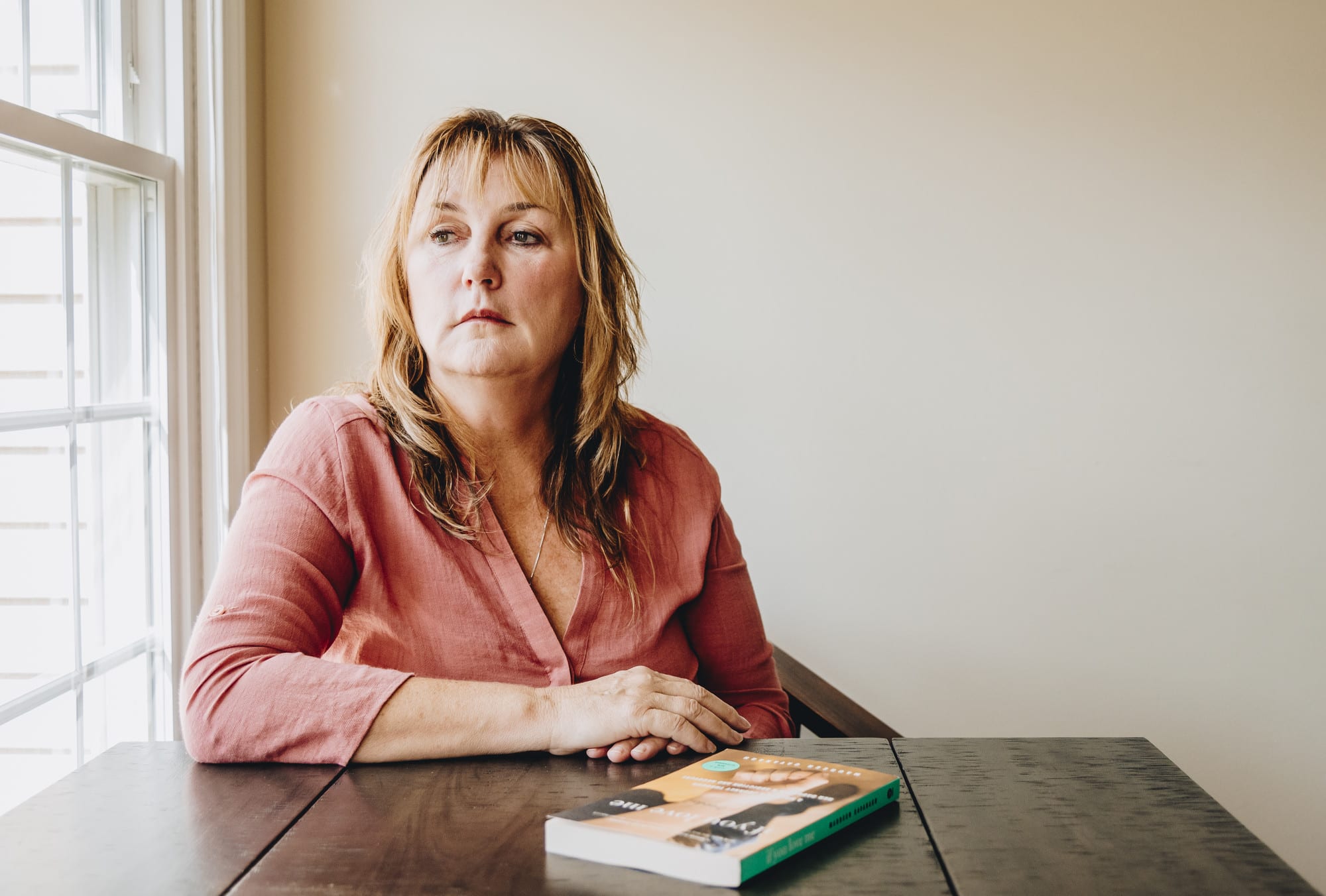
Those words are from the last line of Maureen Cavanagh’s 2017 book,”If You Love Me: A Mother’s Journey Through Her Daughter’s Opioid Addiction.”
For most of that two-year journey, every day of Cavanagh’s life was a nightmare believing her “Ladybug” was probably dead.
The journey thrust Cavanagh, living in Marblehead at the time, into a shadowy and seedy drug world of drugs, addiction and denial.
From confronting her daughter about stolen jewelry, to seeing needle track marks on Katie’s shriveled-up arms, to looking into her lifeless eyes, to not knowing where her daughter was — Cavanagh never stopped loving her daughter and never lost hope that she would somehow find a way to survive.
And she did.
Cavanagh had just started a new career as a family recovery coach after spending several years in special education in the Marblehead school system. She founded Magnolia, New Beginnings, a non-profit peer-support group for people struggling with substance-abuse disorder (SUD) in 2012.
“Initially, I knew it would be a lot of drugs and alcohol, but we had some domestic violence situations as well, but once Katie’s problems began, it was all addiction-related matters,” Cavanagh said.
The problems began when Cavanagh noticed her spoons (used to heat heroin for intravenous injection) were disappearing.
“It’s the little signs that nobody sees because this isn’t a part of your world. This is your beautiful, perfect child; it’s not something you would ever think about your children,” Cavanagh said.
Katie told her mother she had been experimenting with drugs and drinking too much.
“I was horrified,” Cavanagh said. “I underestimated the power of addiction and thought because she came to me, she would always come to me.”
Katie went into rehab, but it didn’t take.
From that point on, Cavanagh’s life was upended. She and ex-husband Mike did unthinkable things, like breaking down doors to rescue Katie from drug dens, searching for her after she bolted from rehab and even kidnapping her to force her into treatment. The lowest point might have been the day Cavanagh jumped into her car with a baseball bat, driving to the home of a man Cavanagh blamed for keeping Kaitie on drugs to kill him.
Katie made more than 40 trips to detox and treatment centers, surviving 13 overdoses, many of them near-fatal, requiring Narcan (a prescribed drug used to treat opioid overdoses) and CPR to bring her back to life. She was arrested multiple times.
Katie wasn’t the only one struggling through the ordeal. Cavanagh fell into depression. There were many nights when she went to sleep thinking she would never see her daughter again.
Nonetheless, Cavanagh continued helping parents of other children battling SUD through Magnolia.
One day, Katie asked her to help the man who got Katie hooked on heroin and taught her how to use a needle. Cavanagh was stunned, but help she did.
“I couldn’t hold anything against Katie that she did when she was addicted,” Cavanagh said. “Every person deserves treatment. I needed to put my money where my mouth is.”
Cavanagh’s story has been shared on CNN’s Anderson Cooper show, as well as in The New York Times. The audio version of her book earned runner-up honors in Audible’s 2018 Best of the Year: Bios and Memoirs category behind Tara Westover’s entry, “Educated.” One of the three other second-place award winners? None other than former First Lady Michelle Obama’s book, “Becoming.”
“Every time I see my book next to hers, I smile,” said Cavanagh. “It’s fun thinking that losing is something I’m proud of. How can you be a loser when the other loser is the wife of a former president?”
Cavanagh says, “Recovery is a long journey; it’s not a destination.” Happily, her daughter’s long journey is now three years old.
“There were very few people other than me who thought she had any hope. And now she works and supports herself and just went back to school.” Cavanagh said.
Magnolia, New Beginnings now has more than 25,000 members in closed support Facebook groups.
‘We have people in every state, in the UK, people all over the place, and we are going all the time,” she said. And it’s all free. I’ve seen it happen to my own child right in front of me, so I really understand what people go through with SUD. You just never think it will happen to you.”
