
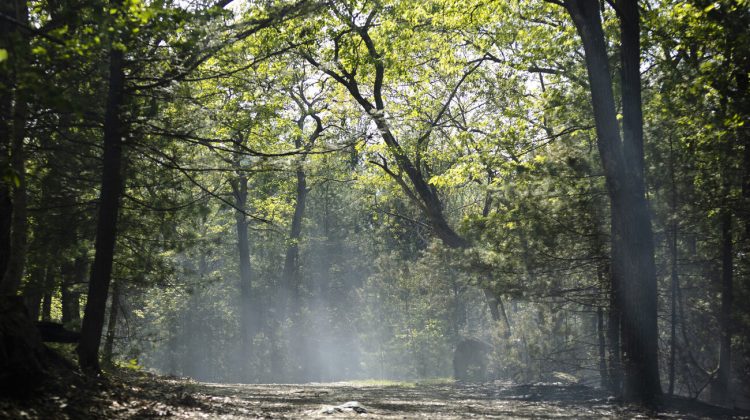
LYNN – The nasty weather may have forced the event inside, but there was still plenty to celebrate Thursday when the Mass. Department of Conservation and Recreation (DCR), Greenbelt, Essex County’s Land Trust, and the City, formally marked the permanent protection from development of more than 2,000 acres in Lynn Woods.
A ceremony that had been planned for the Lynn Woods amphitheater was moved to City Hall due to the wintery conditions. Speakers included DCR Commissioner Brian Arrigo, Mass. Undersecretary for Environment Stephanie Cooper, Mayor Jared C. Nicholson, Senator Brendan Crighton, Representative Daniel Cahill, and Friends of Lynn Woods founder Steven Babbitt. Other guests included members of the City Council, City of Lynn staff, Park Ranger Dan Small, former DCR staff who worked on the conservation restriction, and community members.
The conservation restriction is the culmination of a decades-long effort to permanently preserve the park and ensure it remains an important recreational resource for the region and a supplier of clean water for city residents. DCR and Greenbelt were gifted a conservation restriction on Lynn Woods Reservation by the City and the Lynn Water and Sewer Commission, which own and manage the land.
A ceremony that had been planned for the Lynn Woods amphitheater was moved to City Hall due to the wintery conditions. Speakers included DCR Commissioner Brian Arrigo, Mass. Undersecretary for Environment Stephanie Cooper, Mayor Jared C. Nicholson and Friends of Lynn Woods founder Steven Babbitt.
“At DCR, we have a tremendous opportunity to improve the health and happiness of our residents across Massachusetts by preserving access to beautiful parks around the state like Lynn Woods,” Arrigo said. “We are grateful to Mayor Nicholson, Greenbelt and the Friends of Lynn Woods for their partnership in ensuring this remarkable landscape is permanently protected from development.”
“Lynn Woods is a treasure in our community, and we are committed to prioritizing preservation initiatives that support our outdoor recreation spaces,” Nicholson said.
Lynn Woods was one of the first – and for a time the largest – municipal parks in the country. In 1870, the then Lynn Water Board, now known as the Lynn Water and Sewer Commission, acquired the land that would become Breed’s Pond following a destructive fire in the city the previous year. In 1889, Frederick Law Olmsted, the landscape architect behind Boston’s Emerald Necklace, advised the City of Lynn that the site should be left undeveloped and preserved in its natural state for local residents to enjoy. In 1890, Lynn voters approved the creation of what was then the 998-acre Lynn Woods. The park, which stretches through Lynn, Saugus and Lynnfield, has since grown to the more than 2,100 acres it is today and includes more than 30 miles of trails for hiking, running, skiing, biking, and walking, as well as three water reservoirs.
Over the years, Lynn Woods Reservation has become an important place for those seeking open, green space.
In 2001, the state acquired 40.5 acres of the reservation in Saugus to protect it from a threat of development on the shores of Walden Pond.
This conservation restriction will permanently protect the forestland from future development and ensure it continues to not only provide outdoor recreation, but also protects treasured natural, cultural and water resources for the public. As an urban park, the forestland also serves as an important resource in protecting area residents from the impacts of climate change.