
NAHANT — A regional effort to restore vital underwater plant life along the Massachusetts coastline is moving forward in Nahant, as the Conservation Commission recently gave the green light for a project focused on rebuilding eelgrass beds and strengthening coastal resilience.
The initiative, titled Seeding the Future: Restoring Eelgrass and Building Community Engagement Across the Mass Bays NEP, is led by the Massachusetts Bays National Estuary Partnership, with Northeastern University overseeing this branch of the work.
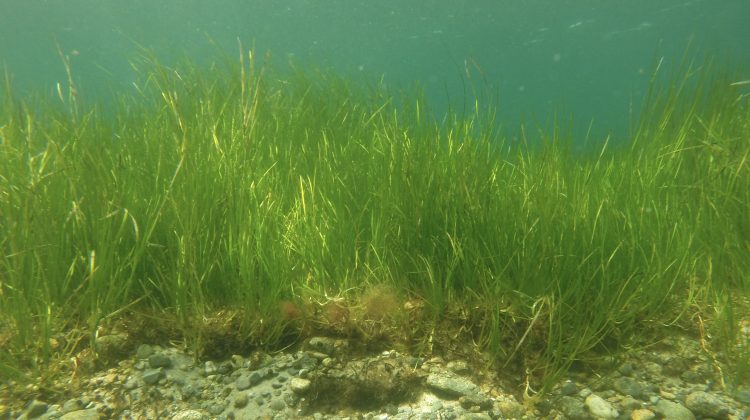
The project centers on restoring Zostera marina, commonly known as eelgrass, a native marine plant that plays a critical role in coastal ecosystems.
Running from late 2025 through 2027, the project spans multiple sites across eastern Massachusetts, including Gloucester, Beverly, Marblehead, Duxbury, Plymouth, and Nahant.
In Nahant, efforts will focus on a planting area off Doggie Beach, paired with a donor site at Curlew Beach, also known locally as Pirate’s Cove.
During the meeting, project lead Diana Chin outlined the scientific approach behind the restoration. Unlike traditional methods that transplant mature plants, this project emphasizes seed-based restoration, which researchers hope will prove more scalable and efficient over time.
Each summer, teams will collect eelgrass flowering shoots by hand from donor meadows. The seeds are then processed, stored, and planted in the fall, when natural predators such as crabs are less active. By spring, researchers expect to see early signs of growth, though monitoring continues into May when seedlings become more visible.
Two primary planting methods will be used. One involves burying seeds in small biodegradable bags filled with sediment, arranged in a grid pattern.
The second method scatters seeds directly onto the seafloor in controlled areas. Both techniques are designed to test what works best under local conditions.
The Nahant planting area could eventually cover between half an acre and one acre over two years.
Initial pilot plots were installed in fall 2025, and early monitoring at other sites has already shown promising signs of seedling growth. Despite the scientific rigor behind the project, Chin emphasized that it is still in its early stages.
Eelgrass restoration carries both ecological and practical benefits. The plant acts as a nursery habitat for marine species such as flounder and lobsters, supports biodiversity, and helps stabilize sediments. It also improves water clarity by filtering nutrients and trapping suspended particles.
Additionally, eelgrass contributes to climate resilience. By slowing wave action and reducing erosion, it protects shorelines from storm impacts. It also captures and stores carbon, making it part of broader efforts to address climate change.
Jillian Carr of Massachusetts Bays notes that these benefits are especially relevant in Nahant, where eelgrass beds have declined significantly over recent decades.
“Beds that are just south of Nahant… have experienced loss,” Carr explained. “Some beds have been nearly lost in completion. Some are just shrinking in size.”
At the same time, Nahant still hosts one of the largest remaining eelgrass meadows in the Boston Harbor region, making it a priority for restoration efforts.
Researchers believe the presence of existing eelgrass increases the likelihood of success, as the plants naturally create conditions favorable for further growth.
Still, they are candid about the uncertainties involved. Restoration work depends heavily on environmental factors such as weather, water conditions, and predation.
“Anything we ever do in restoration science, there’s a chance of failure,” Chin said.
Hurricanes, shifting tides, or spikes in crab populations could all impact outcomes.
However, it is stressed that failure does not mean harm. “Failure means that we’re not enhancing the existing bed. It doesn’t mean we’re damaging the current bed,” The other project lead, Jon Grabowski, clarified. “The failure is zero, not negative.”
To reduce risks, the project includes extensive site analysis and pilot testing before expanding efforts. They also use monitoring equipment to track water temperature and light levels, both of which influence eelgrass growth and flowering.
Community involvement is another key component. While much of the work requires specialized training, residents may have opportunities to participate, particularly during the seed-bagging phase in the fall. Volunteers can also assist at laboratory facilities where seeds are processed and maintained.
“We would love to have the community involved,” Chin said, adding that outreach efforts are still developing. Updates are expected through regional newsletters and local communication channels.
If someone is interested in volunteering, they may contact Diana Chin at [email protected].
For Nahant residents, the project’s impact may not be immediately visible. Eelgrass grows underwater and often out of sight, making progress harder to observe.
But Chin and the team hope that over time, improvements in water clarity, marine life, and overall ecosystem health will become noticeable.
“There’s not going to be a big sign,” Chin said. “We’re not going to be out there every day. But we are there, and we’re working.”
Ultimately, the goal is to spark a self-sustaining recovery. Eelgrass is considered an “ecosystem engineer,” meaning that as it grows, it improves conditions for further growth.
“We’re on a current trajectory where doing nothing may just mean that we lose the entire bed,” Grabowski said. “Even just holding our ground could actually mean that we’re benefiting the system.”