SWAMPSCOTT — The plan for a network of walking trails through Archer Woods has brought some tension between neighbors and the town, with concerns about flooding, wetlands impact, and whether the project is being built as originally presented.
Residents living near the 10-acre wooded park have called for work on the Archer Park Trail project to stop, citing concerns that construction could worsen drainage issues and potentially impact nearby wetlands. The Massachusetts Department of Environmental Protection confirmed it received a complaint about the project on April 1 and referred the matter to the Swampscott Conservation Commission for investigation.
The complaint remains under review, and a representative from the MassDEP said they will determine whether further action is necessary once the Commission completes its findings.
The town has received formal complaints from Swampscott residents with concerns about the project’s impact on homes in the neighborhood and the surrounding environmental area.
A June 2025 conceptual design prepared for the town by Penn Trails describes a low-impact, pedestrian-only trail system intended for walking, hiking, and nature observation, with minimal disturbance to the surrounding environment. The plan outlines a mix of walking and hiking trails winding through the park, including areas near a wetland and a hilltop overlook.
The report also notes that a wetland is present on the site and that permitting, or at least further study, would likely be required for portions of the trail that encroach on those areas.
The project’s design process included public meetings and input from residents, with participants expressing a preference for natural, low-impact trails and raising concerns about privacy, safety, and stormwater runoff. Some residents, however, say the construction they have seen does not match that vision.
“The design presented to the residents does not align with the current project,” wrote Archer Street resident Frank Smith in a March 30 email to town officials requesting that work be halted.
Smith, who said he has been speaking on behalf of neighbors for several years as the project developed, said his primary concern has been how the trail could affect drainage in an area that already sees significant runoff.
“There is a documented history of drainage issues,” Smith told the Item. “My biggest concern is the safety of my property.”
In a follow-up letter, Smith formally demanded that the town “immediately cease and desist all construction, development, and related activities” associated with the project, warning that the current design could lead to stormwater flooding — whether in the neighborhood or within their homes.
Smith said that he and other neighbors had supported the idea of a trail system, but were caught off guard by how the work unfolded.
“We support the trail 100% … what we were being sold is not what we got,” he said.
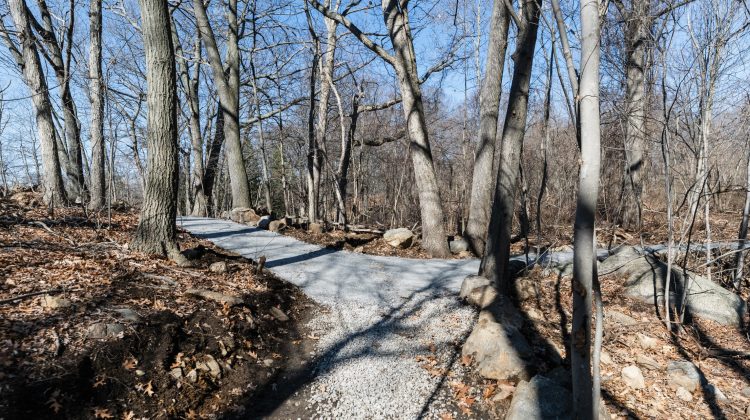
Smith also said that his understanding of the project was that trails would be similar to the natural-trodden paths that had been informally in place before, with minimal work being done in the surrounding wood. “Imagine our surprise to find bulldozers in the middle of the woods,” he said.
In one message to the town, Smith said he was particularly concerned with the use of packed stone in creating trail paths through the area. In the 2025 conceptual design, parameters for the tread material call for “primarily natural surface/mineral soil and stabilized rock” to be “as uniform, firm and stable as possible.”
Swampscott Director of Community and Economic Development Marzie Galazka said that the work being done does follow these parameters.
“The material being used is consistent with the project description — compacted aggregate surfacing,” she said.
In an email to town officials, a MassDEP environmental analyst said the agency had received a complaint alleging that trees and vegetation were being cleared within a buffer zone bordering vegetated wetlands without proper erosion controls.
The analyst noted that after reviewing available records, they were unable to find any record of a Notice of Intent filing for the work, a key step typically required for projects affecting wetlands.
The conceptual design from 2025 does state that a wetlands delineation would be needed and permitting would likely be required for any work in those areas.
Galazka said the town is verifying its initial investigation to confirm wetland areas within the project to ensure that proper permitting is in place.
Toni Bandrowicz, the chair of the Swampscott Conservation Commission, said on Tuesday that she had not yet seen the referral from the MassDEP, but that a review of this nature would focus on where the work is taking place in relation to those wetlands and whether it falls within regulated buffer zones.
“It all is going to depend on several factors, like where the wetland is in relation to the work being done,” Bandrowicz said.
For now, Galazka said that work has been temporarily halted on the Archer Park Trail project while the town works to address residents’ concerns. “We are verifying our initial investigation to confirm wetland areas; and we are working with the Swampscott Conservation Commission to address any and all regulatory issues,” she said.