
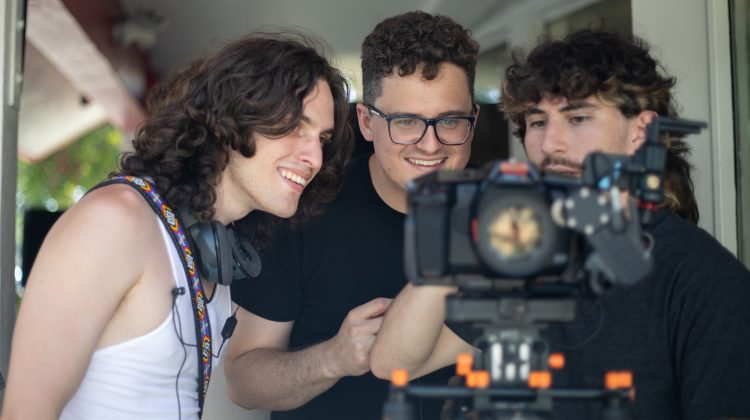
MARBLEHEAD — Filmmaker Andrew Korzenik is using a short film and guided discussion to help audiences better understand how misinformation, alternative media, and conspiracy theories can contribute to extremism.
Korzenik, director and co-founder of Artist’s Web Productions, created “SPRINKLES” Decoded, a 90-minute educational program designed to encourage critical thinking about today’s media landscape. The program combines a screening of his short film “SPRINKLES” with an interactive conversation about the forces that shape public perception and belief.
The initiative comes at a time when trust in traditional media has declined, and more people, particularly younger audiences, are turning to online platforms for news and information.
Korzenik, a former Marblehead resident who now resides in Chicago, said the project grew out of his background in documentary-style theater, where storytelling is anchored in real-life events and interviews.
“Art can be an educational tool and can deal with difficult subject matter in a way that’s accessible,” he said.
Originally, Korzenik intended the film as a reflection on what he believed was the end of the so-called “post-fact era.” However, as production stretched on, he said it became clear that misinformation and conspiracy-driven narratives were not fading but intensifying.
“It felt like a call to action,” he said.
The program begins with a 25-minute screening of the film, followed by a moderated discussion that explores how alternative media operates and how individuals can evaluate the information they consume. The name, “SPRINKLES,” is intentionally cheeky. While it is set in a donut shop, it is a film noir-inspired thriller that was shot in black and white.
Korzenik defines alternative media as content that exists outside mainstream perspectives, noting that while it is not inherently harmful, it can become problematic when it spreads unchecked or misleading information.
He emphasized that the program is intentionally apolitical, focusing instead on the broader media ecosystem and the ways individuals can be influenced regardless of their beliefs.
“We’re all vulnerable,” Korzenik said. “Even people who think they’re on a fact-finding journey.”
A key part of the discussion centers on the difference between journalism and opinion-based content. Korzenik said journalism, at its best, is grounded in fact-finding and objectivity, while much of today’s online content blends opinion with reporting.
He compared consuming opinion-driven media to eating junk food.
“It’s fine in moderation, but it shouldn’t be your primary source,” he said.
While the program is open to a wide range of audiences, including schools and community groups, Korzenik said he is particularly interested in reaching younger people who rely heavily on digital platforms such as streaming services and podcasts for information.
He said these audiences may be especially susceptible to misinformation if they lack the tools to critically evaluate sources.
The film’s narrative follows a character who becomes immersed in conspiracy theories, ultimately losing touch with reality — a trajectory Korzenik said reflects real-world patterns.
“Our goal is to prevent the next person from going down that path,” he said.
Korzenik said the use of film is central to the program’s effectiveness, as it provides a shared experience that encourages discussion.
“Everyone watches movies,” he said. “It makes people more willing to engage.”
Organizers hope to expand “SPRINKLES” Decoded to more communities and eventually develop the project into a full-length feature film.
As misinformation continues to shape public discourse, Korzenik said the goal is to equip audiences with the tools needed to navigate an increasingly complex media environment.
For more information about the program, visit: sprinklesdecoded.com