
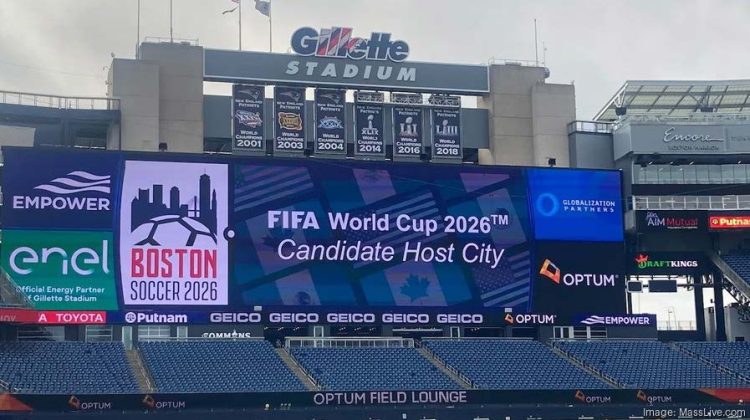
We’re less than three weeks away from Boston hosting World Cup matches. The city is one of 16 across the United States, Canada, and Mexico getting games to an event that’s a global phenomenon. Seriously, the World Cup draws record TV viewership and betting money toward United States sports betting sites.
However, it hasn’t been the smoothest lead-up to hosting for Boston. The opposite, actually. Up until March, there were even talks about the city falling off as hosts altogether.
There was a bitter dispute over $8 million. The city of Foxborough, where the stadium is located, wanted the money up front to pay police. The town refused to use its own tax money for it and asked either FIFA or Boston Soccer 2026 (the local group organizing the event) to pony up. This bickering went mainstream before all parties, plus the Robert Kraft-owned Kraft Group, came to an agreement in mid-March.
Seven games are scheduled for Boston Stadium — its temporary name instead of Gillete Stadium since FIFA blocks use of outside sponsors. Teams like England and France, two favorites to win the tournament, per OnlineSportsBetting.net, will play in the stadium, and bring their huge fanbases with them. But can Boston properly handle it?
There are lingering question marks just days out of the first game. Keep reading, and we’ll discuss what’s going on!
Fan Watch Parties Are Up In The Air
Tickets to the Boston Stadium-held games are exorbitant. There’s hope prices will fall closer to game day, but as of right now, minimum get-in prices are multiple hundreds of dollars and even in the thousands for bigger matches. This might lead more fans to watch parties… if FIFA allows it.
Per a recent article in the Boston Globe, FIFA has granted public viewing licenses to only four of the 17 organizations that received state money for local watch parties and World Cup festivities. That’s a tiny amount for a metro area with a population of around 5 million.
And here’s the worst part: FIFA isn’t saying why it’s not approving the others. Everyone is in the dark whether there’s a reason for the last approval or if anything will change from now until game time. FIFA yaps about the World Cup being about growing the “world game.” Nothing says the world’s game quite like making local communities beg for permission to watch it together.
Hotel Bookings Are Down Big Time
Hosting the World Cup isn’t cheap. We mean, security alone is an $8 million bill, as mentioned before. The hope is that tourism will make up for it by buying rooms, eating at restaurants, and boosting local business. Welp, that hope is dwindling in Boston, at least on the hotel front.
Early indications are that hotel room bookings in Boston aren’t just under expectations, it’s actually behind usual seasonal demand in normal years. Several other host cities are saying the same thing — Kansas City, Philadelphia, San Francisco, and Seattle.
“Like all US host destinations, Boston has seen a reduction in the size of the hotel room blocks that FIFA originally projected,” Meet Boston, the city’s regional tourism bureau, wrote in a statement. “This stems from several factors, including the fact that original estimates from 2-3 years ago were inflated.”
Hotel rooms are big business, obviously. Early reports said that Boston expected to make
$100 million in tax revenue from hotels alone. Now we don’t know how far off current numbers are to hitting that projection, but it might not even be halfway there. In a separate report from the American Hotel & Lodging Association, a whopping 70 percent of surveyed hotels in Boston said World Cup bookings are under projections. Yikes.
Maybe, just maybe, fans are not waiting until the last minute to book? After all, fans and the general population have been conditioned to wait to get the best prices on hotels and tickets to entertainment. If the demand truly isn’t there, prices will fall at the end…
This is what city officials expect out of train tickets to the stadium. It’s believed trains will carry 20,000 fans to each game it hosts. But as of right now, train tickets are at one-third capacity. But purchases came the day of when Brazil and France played in a March friendly, so officials believe the same could happen during the World Cup too.
We bring up trains because another transport issue has just arisen, which we cover next.
To Close The Road Or To Not Close?
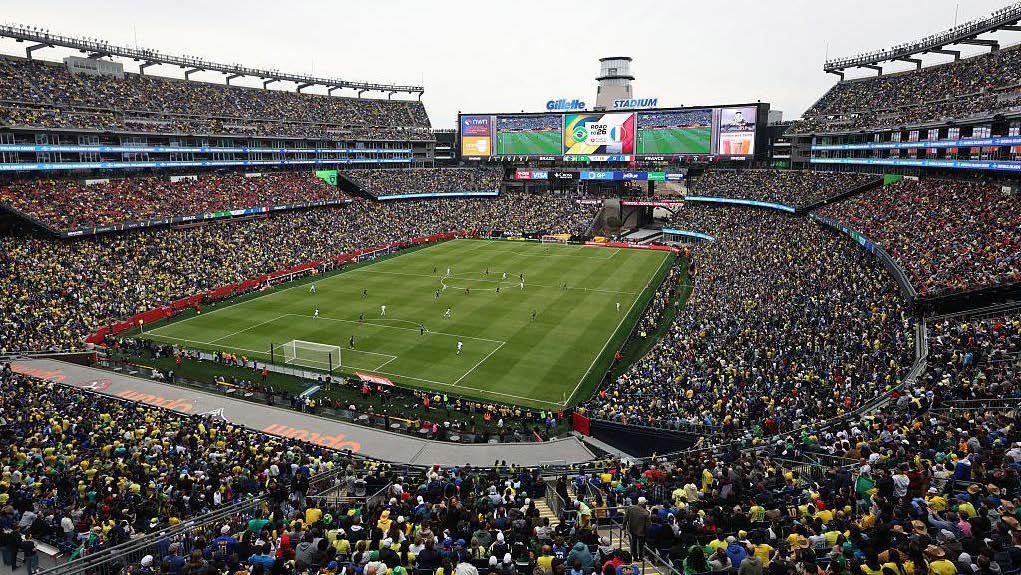
Yep, there’s a road closure dispute now, too. State transportation officials want to shut down part of Summer Street between South Station and Fort Point Channel during all seven Boston-hosted matches. During that aforementioned Brazil-France match, city officials realized the sidewalks around South Station were not built for that kind of crowd frenzy. So they need the entire road to support walkers before and after the matches.
Boston Mayor Michelle Wu’s office says closing that stretch would make traffic even worse in an area that’s already a nightmare during rush hour — when some of these games will take place.
The city also accused the transportation department of trying to big-time them by using temporary eminent domain powers to take over the street if Boston won’t agree. The MBTA says it has the authority and needs the space for security screenings, crowd control, and preventing vehicles from getting too close to large groups of fans.
It’s getting ugly, isn’t it? Look, disputes should be expected, just not this close to the World Cup. The first game is June 13, and Boston has known it was a host for over a year. Couldn’t this have been resolved months ago, not days before the first game?