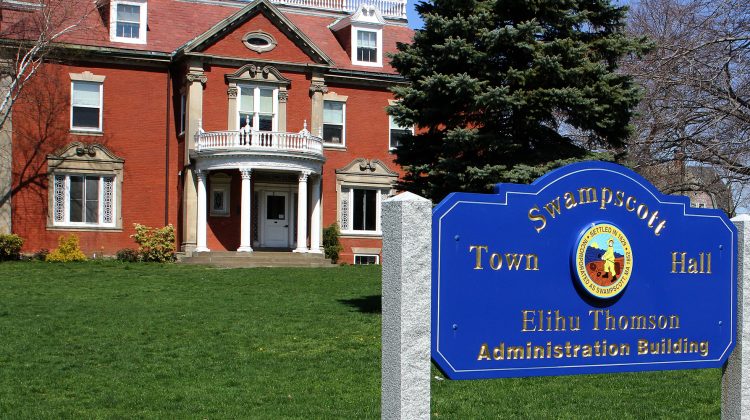
SWAMPSCOTT — Swampscott officials are closing the gap in the town’s fiscal year 2027 budget without cutting services or staff — but Finance Committee members say that approach may not be sustainable for long.
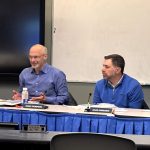
The Finance Committee, which has begun meeting twice weekly ahead of Town Meeting, voted Thursday to send its current budget draft to the Select Board for review, though the Committee itself did not vote to recommend it, as several key items remain unknown.
Committee members outlined a budget that relies in part on the use of excess levy capacity, while acknowledging that there are few clear areas left to reduce spending without affecting services or staffing.
While the town is projected to bring in about $1.4 million in new revenue next year, rising costs are outpacing that growth, forcing officials to rely on additional taxing capacity to close the gap. Without using excess levy, that increase would be even smaller.
“We basically have [$1.4 million] of new revenue to spend in 2027 over what the budget was in 2026,” Finance Committee Chair Eric Hartmann said. “And in order to make it balanced, we’re having to spend another [$1.7 million] of excess levy.”
The dynamic of limited new revenue paired with rising costs has shaped much of the committee’s budget discussions, particularly as major cost drivers like school spending, trash collection, and health insurance continue to increase.
Health insurance alone is projected to rise by more than $800,000, while the school department budget is expected to increase by about 3.25%, largely due to contractual obligations. Town-side expenses are also projected to climb, leaving little room to offset costs elsewhere.
Committee members noted that the current draft of the budget includes roughly $956,000 in reductions from earlier proposals after a careful review from each department. Those reductions, they said, are maintaining level services for residents and avoiding cuts to town personnel.
“Right now, there aren’t really cuts on the table,” Hartmann said. “And it’s in part because we have this excess levy.”
But that reliance on levy raised broader questions about how long the town can continue to use that limited capacity to close budget gaps, rather than making deep structural adjustments.
“I think the question is still ‘is this sustainable?’” said committee member Cinder McNerney. “Is the time to proceed with tightening our belt more this year so that we aren’t kind of backing ourselves into a situation in the next couple of years that doesn’t provide us the flexibility we should be building?”
That concern is not immediate, but it is growing. Committee members pointed out that Swampscott’s excess levy capacity has already declined in recent years, and with a 2.5% increase projected again for FY27, it could be depleted relatively quickly if current cost trends continue.
While Hartmann pointed out that at this point in the budget, not relying on excess levy would mean asking the town for an override to meet gaps, some shared concerns that the town is already quickly using up that flexibility.
“We should be looking at it that way though, because we had $9 million of unused levy capacity — it’s down to $4 million,” McNerney said. “It won’t take much to wipe it out.”
Some members also questioned whether the town’s revenue projections were too conservative, potentially overstating the need to draw on that capacity.
“I feel like we are really conservative on revenues … Just looking at cannabis for example – our year-to-date is [$217,000], but our budget is [$180,000],” committee member Liz Smith said. “I feel like, you know, we’re suppressing the revenue side, which is driving the cap, which is going to cause us to want to cut. But do we need to right now? And you know, are we being smart about it?”
Some cautioned against that approach, emphasizing that conservative estimates have long been a standard in the town’s financial planning.
“I don’t feel there’s a lot of cushion in this budget … I think it’s been cut pretty tightly down by town staff and school staff,” Hartmann said. “I would be hesitant … knowing it’s very tight already to go away from kind of a tried and true practice of not being conservative on our revenue.”
Even without immediate cuts, members suggested that the current process is an early signal of more difficult conversations to come in future years, as rising costs continue to outpace available revenue.
For now, the committee’s focus remains on refining the budget and preparing it for further review by the Select Board, with the understanding that larger decisions may still lie ahead.