
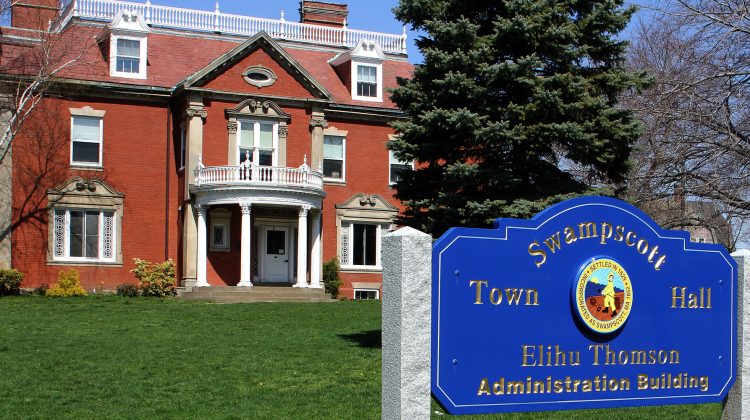
SWAMPSCOTT — Town officials are beginning to dig deeper into the proposed FY2027 budget to identify ways to reduce costs and avoid placing additional pressure on taxpayers. Members of the Finance Committee met Tuesday night to discuss potential adjustments to the spending plan as town leaders work through the early stages of the annual budget review process.
The conversation came after a recent Select Board meeting, where board members asked town leaders to “sharpen their pencils” on several cost assumptions in Town Administrator Nick Connors’ proposed budget, which includes significant increases in areas such as health insurance and solid waste services.
“We have a real problem here,” said Finance Committee Chair Eric Hartmann. “We’ve got this $2.8 million use of excess levy … what can we do to get around that?”
The Finance Committee elected to focus its Tuesday meeting on some of the larger cost-drivers with big impacts on the 2027 budget, rather than reviewing every line item. Overtime spending in the police and fire departments, the town’s health insurance projections, and the cost of a new solid waste contract were among those big-ticket discussions.
Connors attended the meeting along with the town’s Finance Director, Patrick Luddy. Connors told the Committee that the town has already begun identifying possible adjustments following direction from the Select Board to find savings wherever possible.
“As a part of the initial budget process, we requested level service at the direction of the Select Board, but also modest cuts,” Connors said, alluding to renewed contracts for waste management and a town employee healthcare renewal. Most of the budget increases are coming from expenses, he said, rather than town administration.
“To the credit of the town operation side, we’ve cut pretty close to the bone already,” he said. One area of staffing that Connors reported he has already addressed at the direction of the Select Board is overtime funds for the police and fire departments.
“I’ve asked both chiefs to really look at what strategies they may or may not have employed in the past that they see as opportunities to try to manage that,” Connors said. “But we had some pretty direct discussions with them in the last week about what we are asking for them in terms of managing the budget that will be voted on in Town Meeting.”
The town administrator said that approach could result in approximately $250,000 in reductions from earlier projections.
Another area where officials may see some immediate relief is health insurance.
Earlier budget projections assumed the town could face an increase of roughly 14.5% in employee health insurance costs. New information from insurers now suggests the increase could land closer to 10%.
Connors said that the town has been thinking creatively on the healthcare contract, including potentially leaving the state’s Group Insurance Commission and looking at other coverage options. It’s something the town can look into in the future, he said, but such a shift would not be feasible to have completed before the current healthcare contract expires.
Still, if new estimates hold, Connors said, the town could reduce its projected spending by roughly $367,000, although he acknowledged that the final number will not be known until after the open enrollment period closes at the beginning of May.
“It sounds like we’ve had some really good movement,” Hartmann said. “As far as leaving the GIS, it’s not really an option for this year. So we’re just trying to make the best with the situation that we’re in.”
Several committee members noted that, while the cuts presented at Tuesday’s meeting were a step in the right direction, they had concerns about the sustainability of current spending levels. Particularly as the town looks ahead to major capital projects like a $100 million middle school renovation.
Committee member Cinder McNerney was concerned about the long-term implications of the budget. She was particularly concerned that the town would need to issue operating overrides — a Massachusetts state proposition that allows towns to issue a voter-approved property tax increase.
“We’re clearly spending at a level that we can’t keep up with without operating overrides all the time,” she said. “I don’t think that’s where we want to get to — I don’t think that the taxpayer would really want that.”
Connors said town staff are hearing the concerns of the town’s officials and committees. He and Luddy are working on a more detailed multi-year financial forecast that will help officials better understand the long-term implications of current spending decisions and prioritize budgeting “need-to-haves.”
Budget discussions are expected to continue through the spring, before Connors’ budget is presented at Town Meeting in May.