For years, Michael Carroll stood alongside his family on Marathon Monday, leaning on barricades and cheering as runners streamed past.
At this year’s Boston Marathon, the roles were reversed.
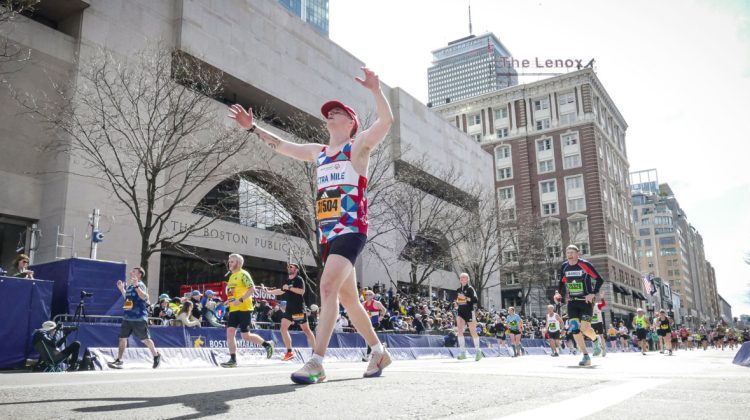
Carroll, a native of Lynn, made his Boston Marathon debut as part of the Special Olympics Extra Mile charity team, raising money for an organization that has shaped his twin brother Billy’s life for nearly two decades.
“Growing up, my family would always either go to the Red Sox game that day or the Marathon itself,” Michael said. “It’s an event that was important in my childhood.”
Billy, who has an intellectual disability, has participated in Special Olympics programs for nearly two decades and competed as a pentathlete. Their mother, Sue, said the organization provided opportunities, friendships and a sense of belonging that extended far beyond sports.
“Special Olympics has given him opportunities he wouldn’t have had otherwise,” she said. “It’s been a huge part of his life, and that makes it a huge part of ours, too.”
Running the Boston Marathon as part of the charity team felt like a natural way to give back, Michael said, and a chance to share a meaningful moment with his brother.
On race day, Billy had one runner in particular to watch.
“It’s incredibly emotional,” Sue said. “We’ve always been there as spectators, and now he’s part of it.”
Michael’s path to the starting line began years earlier at St. Mary’s, where he ran middle-distance events under coach Tristan Smith.
Smith, who coached Michael during his junior and senior years, remembered an athlete defined as much by discipline as talent.
“He had natural ability, but it was really his work ethic that set him apart,” Smith said. “He showed up every day ready to work.”
Michael focused extensively on the 800-meter race and set the school record in the 1,000-meter run during his senior year, something Smith described as one of his favorite memories as a coach.
“I remember that race clearly,” Smith said. “It was exciting to watch, and it showed what he was capable of.”
Even during the COVID-19 pandemic, when quarantines were in place and sports were halted, Smith said Michael maintained his training regimen.
“He didn’t miss workouts,” Smith said. “He stayed committed, even when there wasn’t competition.”
Smith coached Michael during some of the hardest years of his athletic career, including while he was a full-time student, during the pandemic, and through the grind of college competition. Through all of it, he said, one thing never changed.
“Family is everything to Michael,” Smith said. “Wherever he goes, he builds that same sense of connection with teammates and people around him.”
That commitment persisted through college, where Michael balanced academics, competition and recovery from significant injuries. While at Regis College, he underwent two leg surgeries and the road to recovery was hardly smooth.
“I had two leg surgeries for compartment syndrome and still have permanent nerve damage in my leg and foot,” Michael said, “but I didn’t quit.”
For his mother, the marathon marked a moment that once seemed uncertain.
“There were doctors’ appointments where they said they weren’t sure he’d be running again,” Sue said.
Training for a marathon required Michael to shift from middle-distance speed to long-distance endurance. Months of preparation included early mornings, long runs and workouts squeezed around a third-shift job.
Through it all, he said, his family remained his motivation.
“My parents have always put someone else before themselves,” he said. “Running for charity felt like a natural representation of that.”
Along the course, Billy watched from the crowd, but this time, with his brother on the other side of the barricades.
“I hope he sees some type of representation on the race course,” Michael said. “But really, I just hope he sees his brother having a good day.”
For Smith, watching his former athlete reach the Boston Marathon reflected something deeper than a finish line.
“We don’t just coach a sport,” Smith said. “We coach people who are going to go on and do great things.”
More than 30,000 runners made the journey from Hopkinton to Boylston Street on Marathon Monday, each with their own reason for running.
For Michael, that reason had a name.
Eric Hine is a student at Endicott College studying journalism. This story was published in partnership with the Massachusetts News Service.