
Sunday marks 30 years since the Americans with Disabilities Act was signed into law.
Modeled after the Civil Rights Act of 1964 and designed to reduce instances of discrimination against people with physical and intellectual disabilites, the 1990 bill requires employers to provide reasonable accommodations for their differently-abled employees, and imposes accessibility requirements in public spaces.
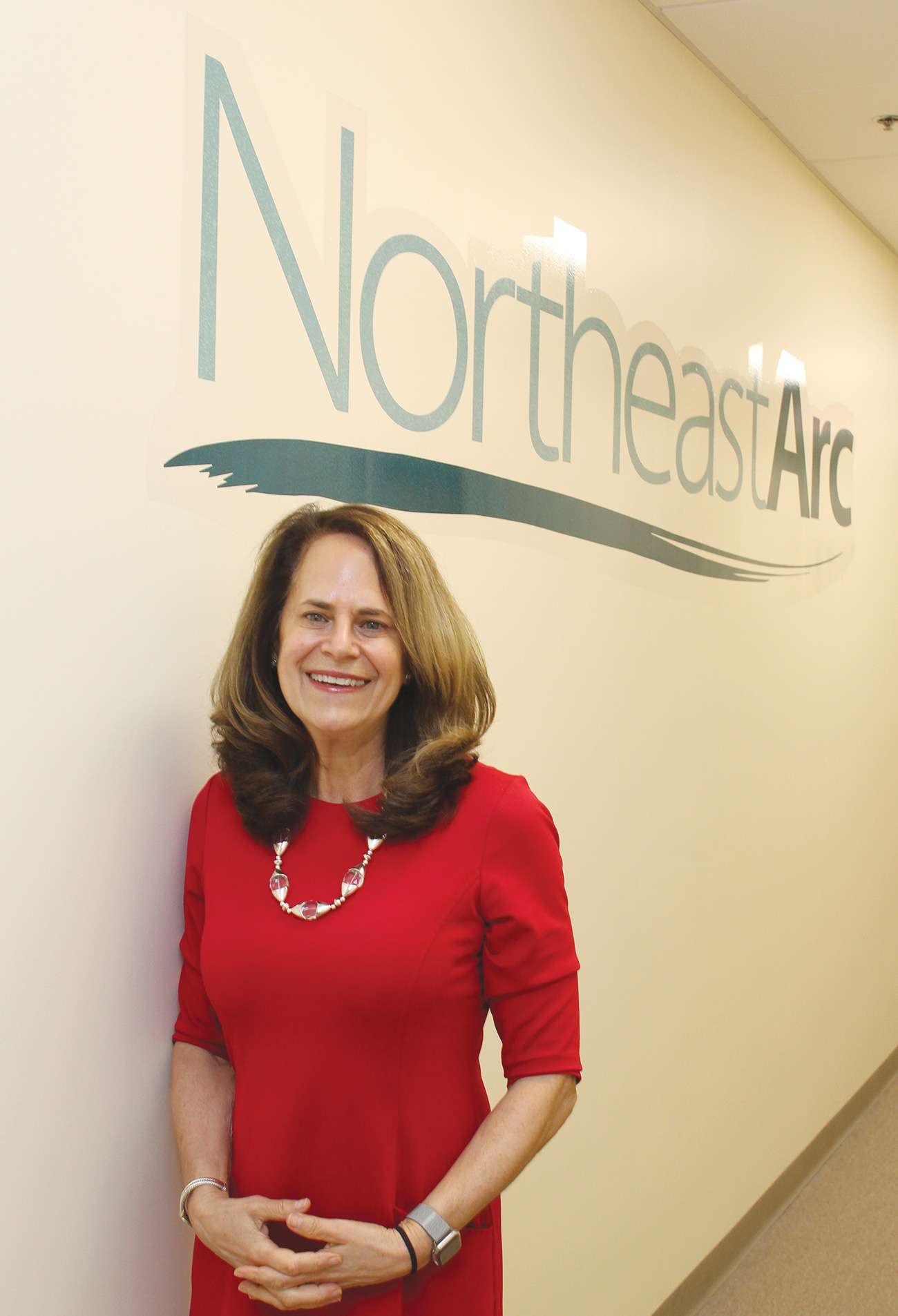
Jo Ann Simons, Chief Executive Officer Of Northeast Arc — a disability services and support organization based in Danvers — said that although there’s still work to be done to create more inclusive communities nationwide, the bill itself brought with it a wave of change when it comes to how the country treats its citizens with disabilities.
“Obviously any piece of civil rights legislation is the key and the power behind societal changes,” Simons said. “The work is not done, (but) having enforceable legislation has resulted in, I think, the kinds of cultural changes we were hoping for.”
She said improvements have been slow but noticeable, noting that conversations surrounding disability rights and accommodations are far more progressive than ever before.
“I don’t hear the conversations I did 35 years ago about the costs of these things,” she said. “When you build a building, people just assume now that it’s going to be made accessible to people with disabilities, whereas when the legislation was first being discussed and promulgated, people were concerned about the burdens and costs.
“Now, 30 years later, we’ve realized that some of those costs are insignificant in terms of the opportunity to include all people in all settings.”
Before the ADA, which Simons referred to as a “historic piece of bipartisan legislation,” Americans with disabilities could be refused service in restaurants and grocery stores, wheelchair-bound travelers were unable to take trains or buses that could not accommodate them, and employers were free to discriminate against disabled candidates at will.
Seventeen years later, however, a 2007 White House assessment of the ADA’s progress found the bill had “changed the face of American society in numerous concrete ways, enhancing the independence, full participation, inclusion, and equality of opportunity” of the country’s disabled citizens.
Among other advances, the letter stated that people with mobility impairments had experienced significant improvements in physical access to transportation, businesses, and government agencies, while people with disabilities across the board received far more accommodations at their workplaces and were less likely to be terminated due to their disabilities.
“People still discriminate in decisions around employment and worrying about the accommodation it might take to have somebody work, but on the other hand, we’ve seen greater numbers of people with disabilities enter the workforce and be successful,” Simons said of the ADA’s impact another 13 years later. “The blatant discrimination has markedly decreased. They’re graduating high school, they’re going to college, they’re getting married, they have jobs, they own homes.”
As the mother of an adult son with Down syndrome, Simons said the outlook for children with disabilities has improved drastically even from when her own son was young, although she noted the COVID-19 pandemic has exposed many ways in which people with disabilities have yet to achieve full equality.
Even as the world has tried to come together virtually, people with disabilities are still often left out of the conversation, Simons said — unable to overcome what have ultimately become virtual access barriers.
“Using Zoom or other opportunities to meet sometimes (presents) a barrier because a password has been required by the host, which means someone with an intellectual disability has an additional step that may eliminate them from participating,” she said. “(My son) is pretty good with technology, but every single application even has a different set of rules for a password. I’ll try to help him, but he lives 90 minutes from us, so how can I help him connect? Everything has become very complex.”
She added that even food delivery systems during COVID-19 have refused to take EBT credits, disenfranchising both disabled and low-income individuals and putting them at higher risk during the pandemic by forcing them to do their food shopping in-person.
To achieve full equality, Simons said governments will need to think much more inclusively by taking the needs of every community member into account.
“When we’re designing these systems, we have to think of disability in every aspect of what we do, because too many Americans are touched by disability,” she said.