
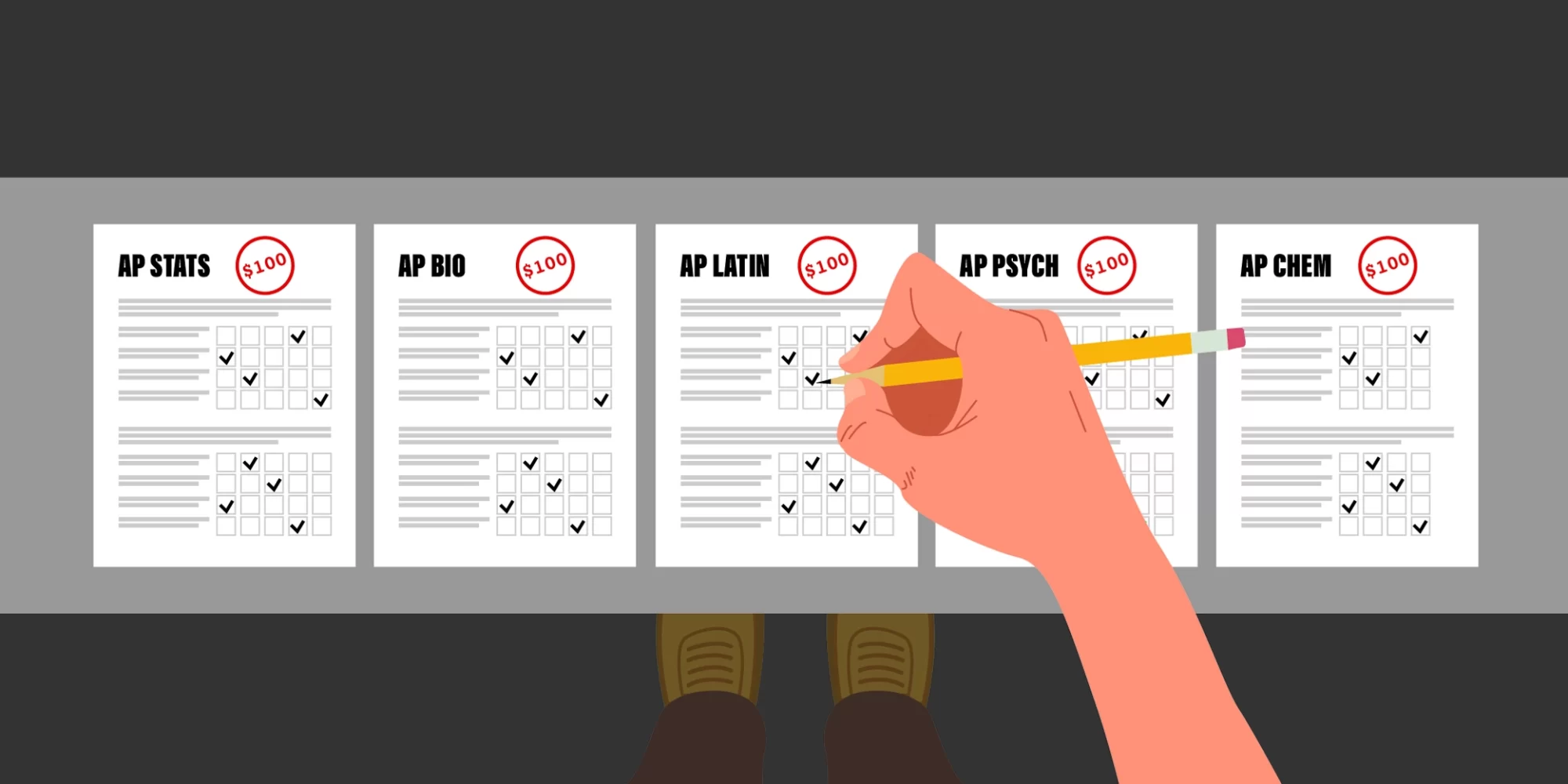
PEABODY — The School Committee voted unanimously to cap fees for Advanced Placement testing at the high school.
Superintendent of Schools Josh Vadala told the committee during its Feb. 28 meeting that there are a number of families with up to three children taking up to four or five AP courses. The cost to take one AP exam is $100. Free and reduced lunch students receive an $85 subsidy, leaving the student responsible for just $15 per exam.
“But many of our students pay for every single course they take,” Vadala said.
He speculated that some families are paying up to $1,200 for their children’s AP exams.
The cap limits the expense to $300 per family for one child; $400 per family for two children and $500 per family for three or more children.
Vadala said it will cost an estimated $8,300 for the district to cover the cost of the cap, which could be covered by the school’s AP revolving account.
“Each year we do have a little bit of revenue coming in and this would be sustainable,” said Vadala. “We want to encourage our kids to take more AP classes and we definitely don’t want money to be an issue as to why they don’t take the class. We’re hoping that this proposal will start to defray the cost for some people and we feel it’s sustainable moving forward.”
Guidance Department Chair Robert Quist said “it’s important for students to have access to everything that we offer in Peabody.”
He noted that there were approximately 1,300 colleges and universities that were SAT-optional or did not require SATs before the pandemic. Now, he said, that number has “skyrocketed” to approximately 1,800.
“What that has done is they are looking even more closely and taking a deeper dive on what are the levels of the courses our students are taking,” Quist said. “Colleges are placing more emphasis on the courses students are taking.”
In 2018, 500 AP tests were administered at Peabody High. The number dipped during the pandemic, but is expected to rise to close to 600 this year. Peabody High currently offers 23 AP courses, with 20 percent of all students taking at least one course.
The number of AP sections jumped from 30 to 37 this year. Quist said he doesn’t see that number dropping going forward, and hopes that it will continue to increase.
“From what I can tell in checking with colleagues, there is no other school on the North Shore, perhaps maybe one, that offers that many AP courses,” Quist said. “The expectation is that if a student takes an AP course, they have to take the exam. But for some families, the cost limits the number of AP courses they can take. We have families struggling with this the last few years as (the cost) can be a huge burden on them.”
Quist said he remembers having conversations before the pandemic about how to increase the number of students taking AP courses. One step, he said, would be to adopt a cap similar to the family cap for participation in athletics “to make it more realistic” for families to be able to manage the costs.
“This can be a huge burden on them and I really think this is one small way to help,” said Quist. “Down the road, it would be great to get to 25 percent of kids taking AP courses. It would be awesome to get to 30 percent. The cost really limits the number of courses students can take, which may be, in part, why some kids can only take one. I would hope we can just take this one small step moving forward.”