NAHANT — Save King’s Beach, an organization dedicated to cleaning up beaches in the area, has extended its mission into town to do beach water quality testing at Nahant Beach.
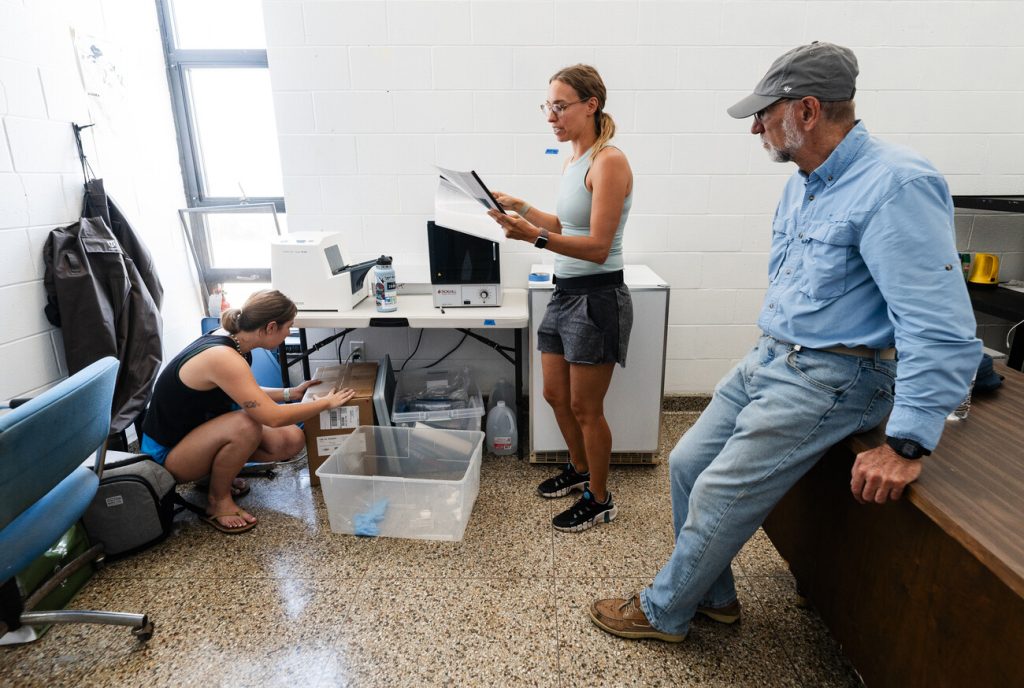
The organization hired an intern from Northeastern University, Hannah Bray, a Marine Biology major, to help with the testing. They were even given space for a lab at the Ward Bath House along Nahant Beach.
“What really spurred us to do testing at Nahant was that last year was the worst year, on record, for the town’s water quality,” Save King’s Beach Founder Andrea Amour said.
“Save the Harbor/Save the Bay had it documented at a rate of 78 percent last summer,” she said. “We decided to do some exploratory work to figure out, are there certain areas testing higher than others? Are there days that are worse than others?”
Amour continued, saying it was a fact-finding mission to begin to better understand the issue.
She said she thinks the recent expansion into Nahant can help benefit the communities of both Nahant and Swampscott.
“We always had the idea that more data is better. Gaining more information gives us more power to understand our ecosystem better, to inform lawmakers of any changes that need to happen, or any infrastructural situations that may be going on.”
Amour said “the data gives us more power to make decisions, rather than wonder what’s going on.
“We wanted to ensure that if we’re telling people, ‘Watch out for King’s Beach,’ we want to be able to give them an alternative and say, ‘Yes, we feel strongly that you can go to Nahant Beach,’ and the data, so far, is backing that up. That’s what we’ve been seeing,” she said.
Amour explained that the project was a collaboration between numerous stakeholders. She cited Northeastern University, the Marine Science Center, the Department of Conservation and Recreation (DCR) — which provided the space for the lab — and Save the Harbor/Save the Bay for helping oversee the project.
“There were a lot of people who lent a hand, lent expertise, to make this project happen, which we’re really grateful for,” Amour said.
Bray said she was encouraged to join the mission when her Program Manager at Northeastern introduced her to Save King’s Beach. She then met with both Save King’s Beach and Save the Harbor/Save the Bay and “felt right at home.”
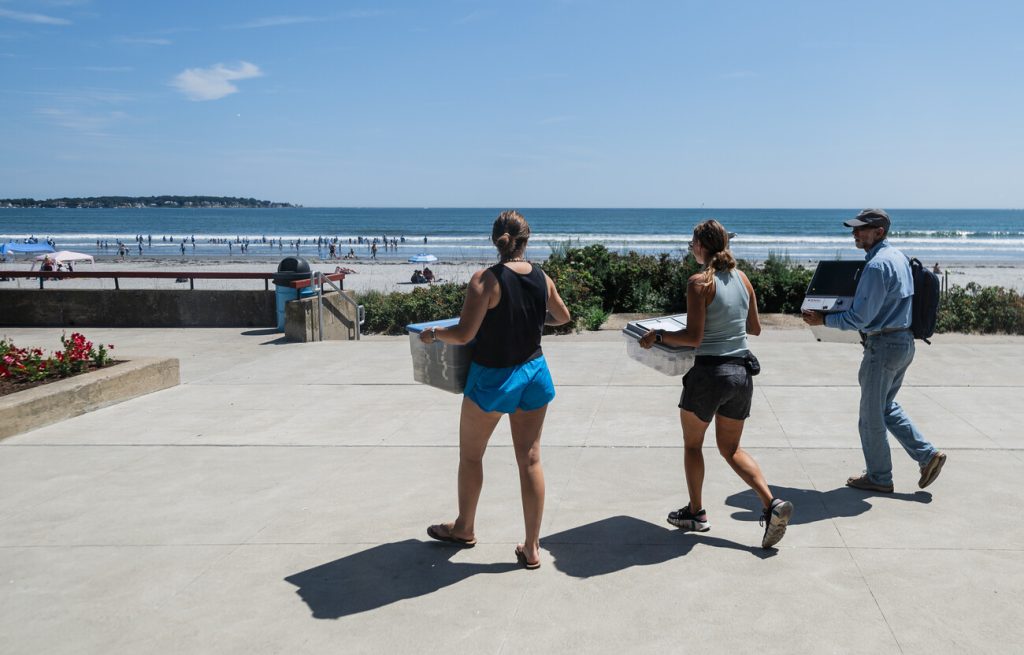
She then spoke about what compelled her to start doing environmental work.
“I went to Tufts for my undergraduate degree, and I studied Environmental Studies and Biology, so I’ve really been wanting to do something within the marine realm ever since I was a kid,” Bray said. “I decided to get my Master’s degree at Northeastern in Marine Biology.”
She said she was always interested in exploring work that involved public health. “It’s a two-way street. … Making sure that people have access to clean beaches is also something that’s really important to me, to help raise awareness and get more people coming to the beaches.”
Bray explained what an average day in the lab looks like.
“Usually, I get here around 10 a.m., and normally I then drive to the far end of the beach and make my way along the various testing sites,” she said. “I put these waders on and collect samples from each testing site within three feet of water.”
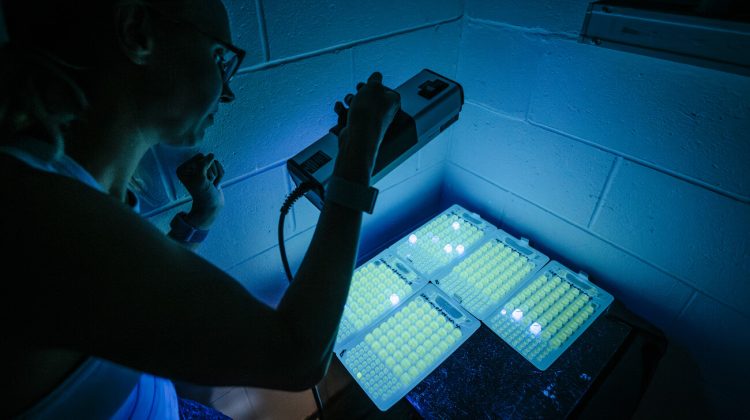
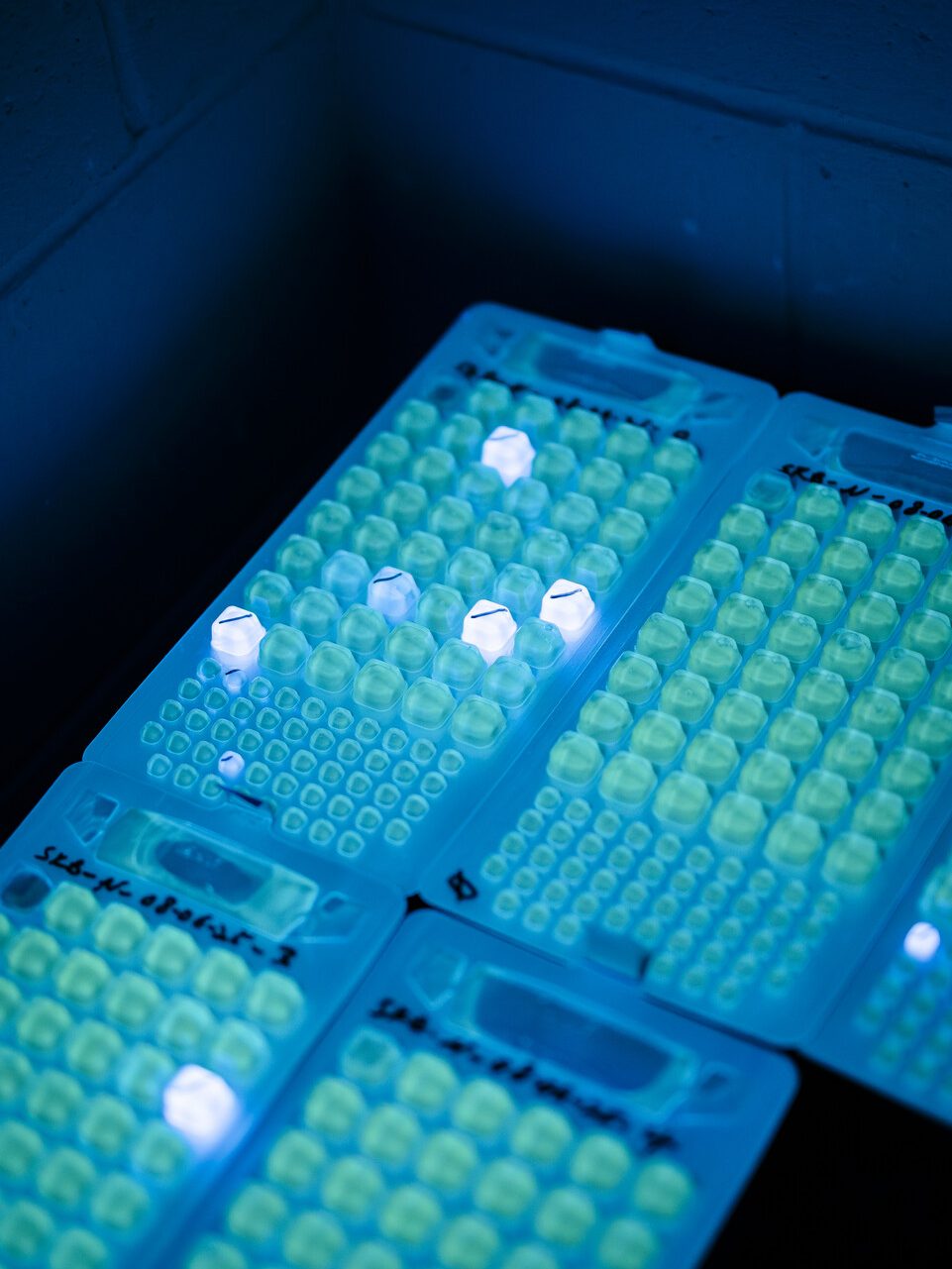
Once she makes her way along the various testing sites on the beach, Bray returns to the lab to start analyzing the samples. A reagent is put into the different water samples, which will glow with bioluminescence if bacteria is present in the samples, before putting the mix into a Quantri-tray — composed of little wells or “trays” with water samples — where it’s then incubated for up to 24 hours.
“Essentially, we’re looking for when it fluoresces blue,” Bray said, adding that they’re looking for the rate of Colony Forming Units when looking for levels of Enterococcus (bacteria) among the various testing sites.
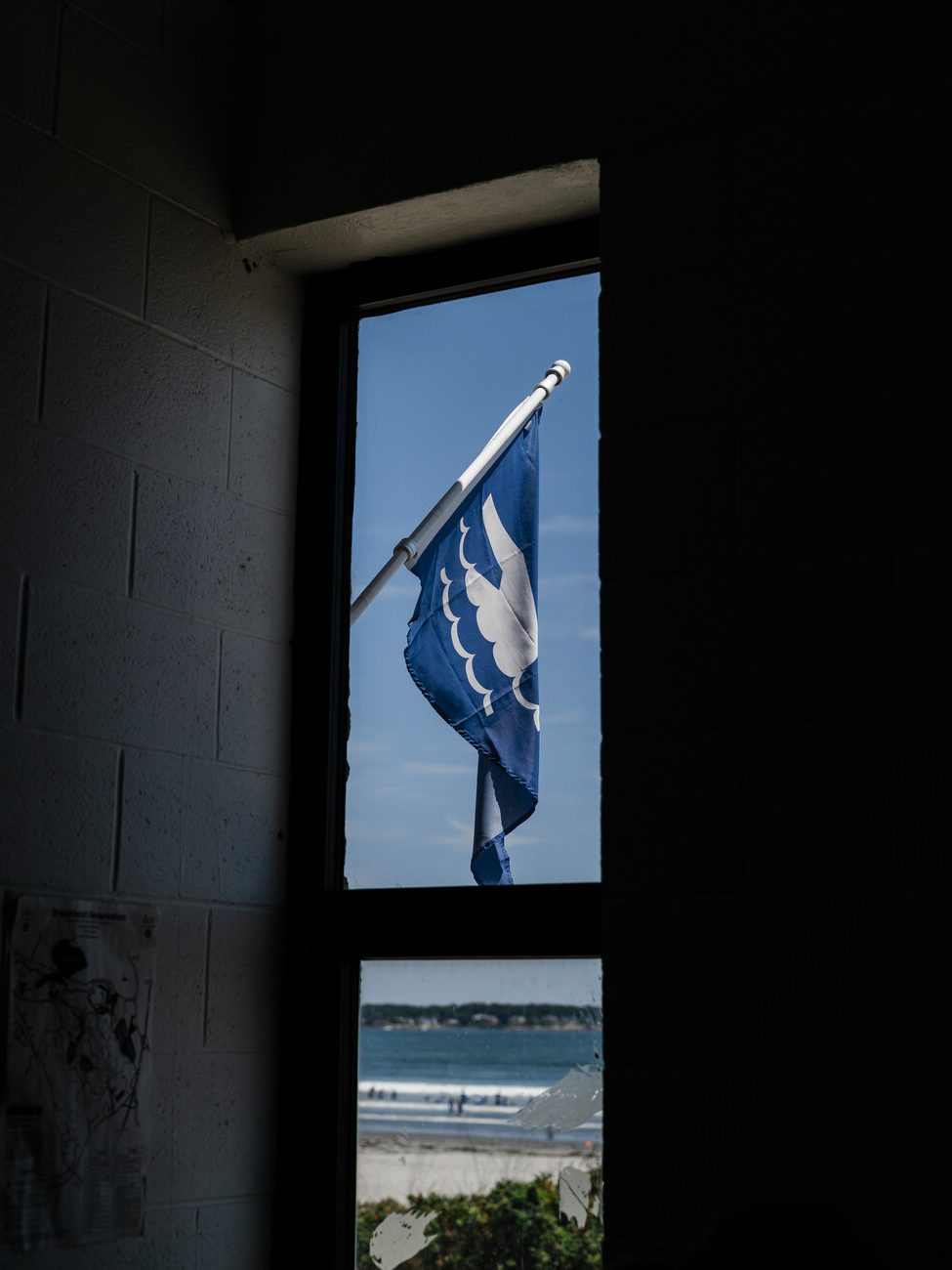
From there, once the samples are ready, they’re incubated for at least 24-28 hours.
Arthur Freedman, one of the volunteers for Save King’s Beach, said he’s been helping out the organization for two years.
“I volunteer at different events in town, where we have an informational table, letting people know what we’re doing,” Freedman said. “I think we’ve made a difference so far, and it’s great to have Andrea (Amour) and Save the Harbor work together with Northeastern University and the DCR for testing in Nahant.”
He added that in his opinion “we’ve been seeing moderate test results this year so far.”
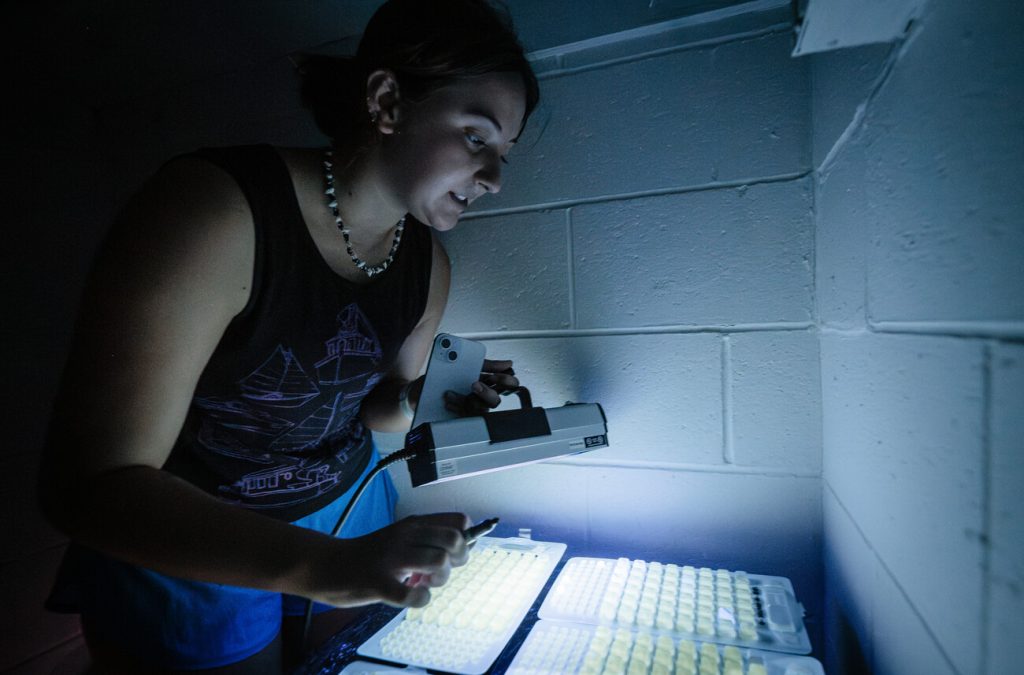
Once the water samples have completed the incubation period, they’re taken out and placed in a dark space with a UV light to detect which trays luminesce.
“Some of the trays fluoresce very brightly, and others are very faint, and anything that fluoresces is considered a positive,” Amour said, explaining that it helps detect bacteria. “We want to make sure that we can always see as clearly as possible what is fluorescing, just to make sure that we don’t miss anything.”
She added that “the more it fluoresces blue, the more bacteria is present.”
Bray explained that testing initially began around the end of July. She said testing may continue throughout all of August, though that has not been finalized yet.
Save King’s Beach has a gofundme page where any interested community member can donate to help keep the lab running. Amour explained it costs approximately $1,000 a week. She added that all donations for this project are tax-deductible.
Those who may be interested in donating to the cause can visit https://www.gofundme.com/f/support-save-the-harbor-save-the-bay