
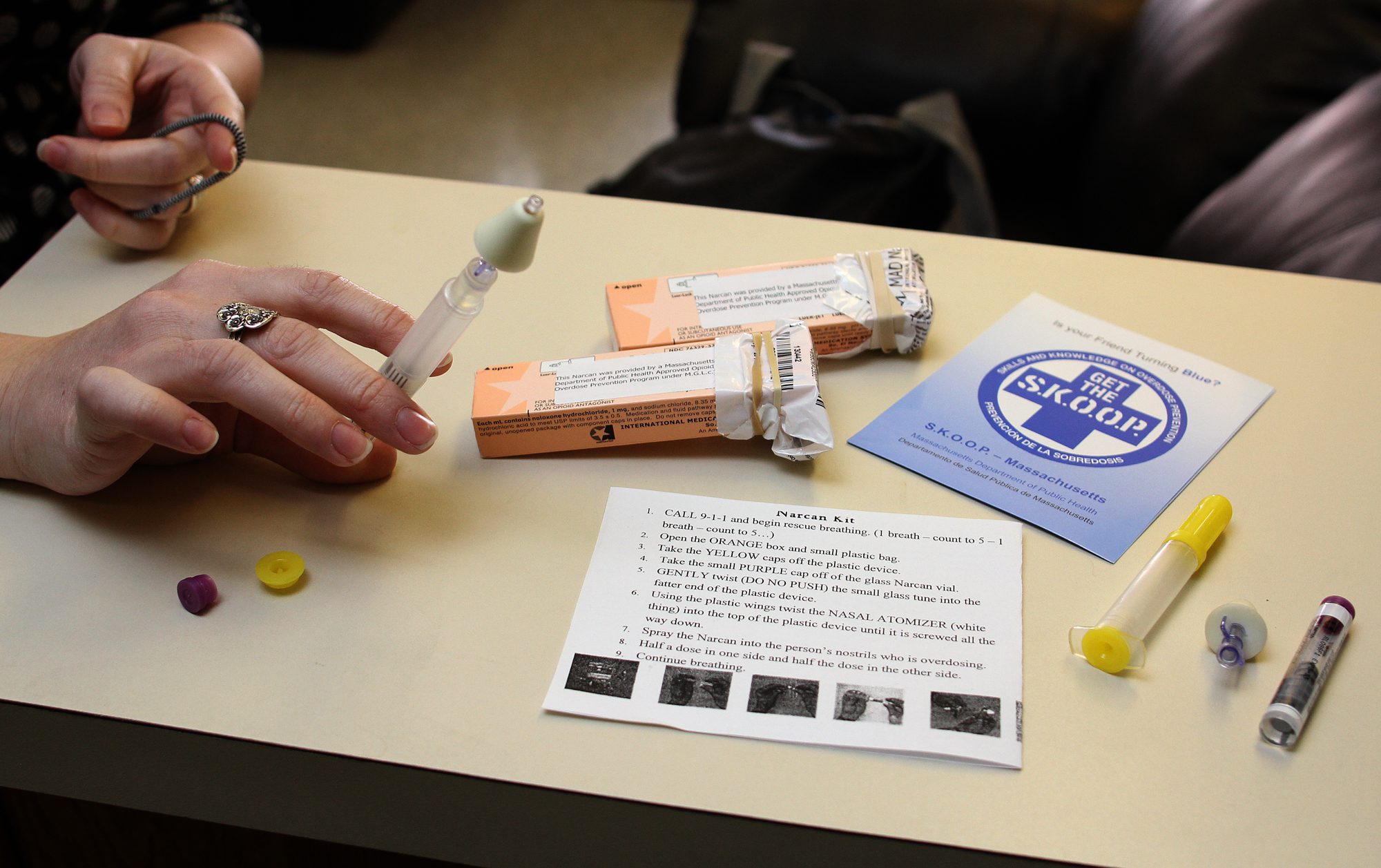
LYNN — The 2025 Opiate Report revealed a staggering 25% decrease in the number of overdoses in Lynn, the lowest in over a decade.
The report shows that in 2024, the number of overdoses reached a total of 307, but last year, that number went down to 231. It’s a stark difference compared to 2017 and 2021, when it reached upwards of 503. The improvement over the years is the result of a proactive, “strategic outreach initiative,” said Faustina Cuevas, Lynn’s chief of Diversity, Equity, and Inclusion.
“We’re coming together weekly to discuss these trends and patterns and figure out how we can be more thoughtful in addressing these issues. Really trying to tackle things before it becomes a major problem,” she said, adding: “This was a multi-agency approach to try to really get those folks some help and not let that become a bigger issue.”
That weekly meeting, which takes place on Fridays, includes both Cuevas, who serves as the senior advisor to Mayor Jared C. Nicholson and Candice McClory, the substance use disorder coordinator and community liaison, as well as the Public Health Department, the Lynn Police Department Bike Patrol Team and a number of service providers including the Lynn Calm Team and representatives from the Elliot Tri-City Community Behavioral Health Center, My Brother’s Table, the Healthy Streets Outreach Program, the Lynn Community Health Center and the Lynn Shelter Association.
The intentionality in having community organizations, service leaders, and the City all working together in tandem leads to not only constant communication and awareness in what’s going on in the community, but also allows them to come together and provide people with the necessary support and resources.
“Trying to figure out where the gaps are that need to be filled, I think that is a major part in why we’re seeing a decrease,” added McClory. “Just being out there more actively providing those overdose risk reduction education and materials, and just really building relationships with people.”
The resources available in Lynn include access to medication and treatment. McClory mentions the Lynn Comprehensive Treatment Center on 11 Circle Ave., which provides medication for opioid use disorder, as well as Lynn Community Health Center, which also provides mobile treatment.
With that, McClory points out that while the overall number of overdoses has decreased, there has been a 2% increase in overdoses amongst the BIPOC population. It’s something they are all actively looking into.
“We are looking to increase our efforts in that population and find out why there is an increase,” said McClory.