
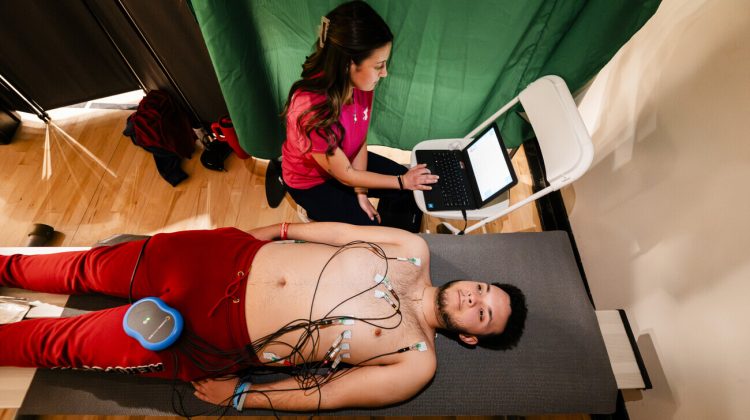
PEABODY— As teenagers lined up inside the Torigian Family YMCA on Monday, rolling up their sleeves for a five-minute heart test, two families stood nearby knowing exactly why it mattered.
At a heart screening event held in partnership with the Espinal and Facey families, more than 90 young people — with additional walk-ins pushing the total past 100 — received electrocardiogram (EKG) screenings aimed at detecting silent, life-threatening heart conditions. Who We Play For, a non-profit with the mission of “eliminating preventable sudden cardiac death in the young through affordable heart screenings, AEDs, and working with communities to honor every kid who never had the chance,” joined forces to host the event.
The event was held in memory of Freddy Espinal, a Peabody student-athlete who died at 17 following a sudden cardiac emergency during wrestling practice. His family has since become advocates for mandatory heart screenings for young athletes, backing legislation known as “Freddy’s Law.”
“We’re doing a heart screening in memory of my brother,” Freddy’s sister, Alexis Espinal, said. “We’re trying to pass this law to make this a requirement.”
She said, this has pushed many of Freddy’s friends and teammates to get screened as well.
Freddy’s story is heartbreakingly similar to that of 18-year-old Jason Facey Jr., a Framingham State University soccer player who died suddenly in August of 2024 from hypertrophic obstructive cardiomyopathy (HOCM), a condition that often goes undetected until a catastrophic event occurs.
Facey’s family has joined the Espinals in advocating for legislation that would require EKG screenings as part of high school sports physicals.
Under House Bill 5046 — formerly H.4622 — high school athletes in Massachusetts would be required to undergo an electrocardiogram screening prior to participating in school sports. The bill also mandates insurance coverage for the test, protecting families from additional costs. The legislation is currently under review by the Joint Committee on Healthcare Financing after receiving favorable movement from Financial Services.
Jason Facey, JJ’s father, said, “Considering that the first sign could be the last, the state of Massachusetts will not check the heart of a young athlete, or anyone, unless they have an issue and they live through it. We are trying to fill the gap in the health care marketplace until the state of Massachusetts can step up and provide this service to families, athletes, and communities alike.”
Melissa Facey, JJ’s mother, added, “There’s no intense review of one’s heart. They don’t do EKGs, and it’s not required as a standard physical for the youth today.”
State Rep. Tom Walsh, who filed the bill after meeting with the Espinal family, called the proposal a common-sense preventive measure.
“We ended up filing legislation that would require that if you’re playing a high school sport, as part of your physical, the EKG would be included,” Walsh said. While acknowledging pushback from the insurance industry, he emphasized that advocates are now working through cost analysis to demonstrate that the screenings represent “a very small investment for a huge return.”
Walsh also praised the families leading the effort. “These families are incredible,” he said. “I don’t know if I was in the situation that they are in that I could find the strength to go out and do what they’re doing.”
Standard sports physicals typically involve a stethoscope exam, not an EKG, the only screening tool capable of detecting certain electrical abnormalities of the heart.
Registered nurse, Emily Knight, who is also the heart screening director for New England, and a volunteer for Who We Play For, said that while structural heart conditions like hypertrophic cardiomyopathy can sometimes be identified, electrical disorders cannot be detected after death and often show no outward symptoms.
“There are several problems that you can have with your electricity that are only detectable on an EKG,” Knight explained. “They can’t be found at a doctor’s office with a regular listening to their heart and lungs. This is the one screening tool that will make this difference.”
Knight said that oftentimes, they find abnormalities in students who are screened during these events requiring further evaluation.
At a recent charter school screening week, 89 students were screened, and six abnormal results were identified, according to Jason Facey. At a following event, 33 students were screened, and four abnormalities were found.
“If we can catch one kid that doesn’t end up making a sad family like JJ’s or Freddy’s,” Knight said, “then it’s worth it.”
“This is the one screening tool that will make that difference to catch these abnormalities in these kids,” she added.
The screenings are conducted by trained medical professionals, with results uploaded securely and reviewed by pediatric cardiologists. Families receive follow-up emails, letters, and phone calls if abnormalities are detected.
Kaylee Liberty, sports director and assistant camp director at the YMCA, said she was a student athlete in college on the ice hockey team.
She said many of her teammates also had heart conditions that they did not know about until they started playing a competitive team sport.
Liberty added, “I think it’s great for the kids to get tested early and have that option.”
Addison Merrill, a close friend of Freddy Espinal, was like a sister to him. During high school, she served as a manager for the Saugus/Peabody wrestling team for four years, spending countless hours alongside Freddy at practices and matches.
“It could have been prevented with a simple EKG,” Merrill said.
Merrill set out to make sure no other family, and no other friend, would have to endure the same loss.
With guidance from her aunt, Beth Raucci, a principal in New Hampshire who runs annual heart screenings at her own school, Merrill began organizing a screening at Peabody High School during her senior year. Raucci, who had witnessed Addison’s grief firsthand, introduced her to the screening program and encouraged her to bring it to her community.
The Peabody High event was a major success and helped bring widespread awareness to the need for preventative heart screenings in the area.
Now a freshman at Plymouth State University enrolled in an accelerated physical therapy program, Merrill is continuing her advocacy efforts. She is preparing to organize another screening at Plymouth State, expanding the reach of the program beyond Peabody.
She is also employed at the Torigian Family YMCA as a lifeguard and swim instructor. Using that connection, Addison worked to bring the screening event to the YMCA, helping coordinate logistics, outreach, and volunteer efforts. She even took time away from her college studies to return home and help organize and set up Monday’s event.
Merrill has been instrumental, not simply as a volunteer, but as a driving force behind bringing heart screenings to Peabody.
Freddy’s cousin, Jeoneo Rowe, said the event is about raising awareness among younger athletes.
“It’s just exposure,” he said. “I’m here supporting my family.”
Screenings have already taken place at Peabody High School, with another scheduled there in April. Organizers say more events are planned throughout Massachusetts, including a large-scale, two-day screening this summer at the Dana Barros Basketball Club in Stoughton, where the facility has been donated free of charge. The event will take place on July 18 from noon to 6 p.m. and on July 19 from 10 a.m. to 4 p.m.
Advocates say they will continue hosting screenings until statewide legislation is passed.
For families like the Espinals and Faceys, with every young athlete who sits down for a five-minute EKG, they move one step closer to turning heartbreak into protection.
Photo: Spenser Hasak | Purchase this photo
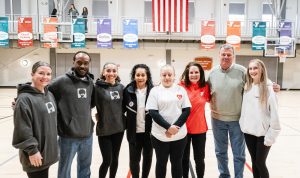
Photo: Spenser Hasak | Purchase this photo
Photo: Spenser Hasak | Purchase this photo
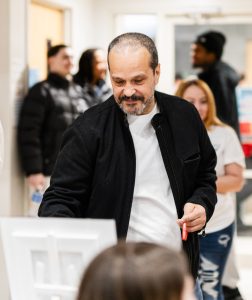
Photo: Spenser Hasak | Purchase this photo
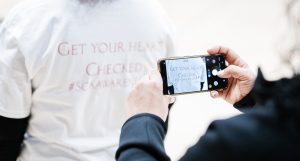
Photo: Spenser Hasak | Purchase this photo
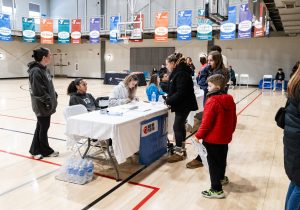
Photo: Spenser Hasak | Purchase this photo
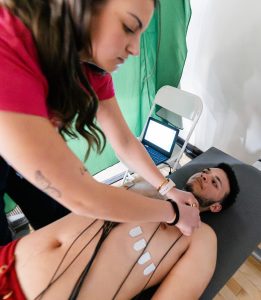
Photo: Spenser Hasak | Purchase this photo
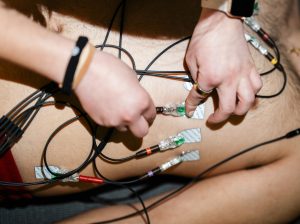
Photo: Spenser Hasak | Purchase this photo
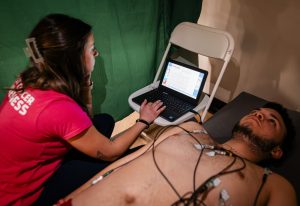
Photo: Spenser Hasak | Purchase this photo
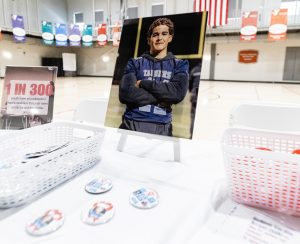
Photo: Spenser Hasak | Purchase this photo