
MARBLEHEAD — Ayatollah Ali Khamenei, the Supreme Leader of Iran, has been killed after the United States and Israel launched a major attack against Iran’s regime, dramatically escalating the conflict in the Middle East.
Donald Trump has urged the Iranian people to rise up against their government following the strike.
Meanwhile, Congressman Seth Moulton (MA-06) is calling for transparency, accountability, and a renewed role for Congress, as the United States faces growing casualties in the escalating conflict.
According to an update from United States Central Command (CENTCOM), three U.S. service members have been killed in action as of 9:30 a.m. on Sunday, and five others have been seriously wounded in the developing war. The news prompted a sharp response from Moulton, a Marine Corps veteran who served multiple tours in Iraq.
Trump said the United States would “avenge” the deaths of the service members before the conflict ends.
The three deaths marked the first known American casualties since U.S. and Israeli forces launched a major military operation against Iran that intensified after Khamenei’s death on Saturday.
“Our troops and Gold Star families deserve reverence, not callousness,” Moulton said in a statement. “On Saturday morning, Trump shrugged and said casualties ‘often happen in war,’ and now they have.”
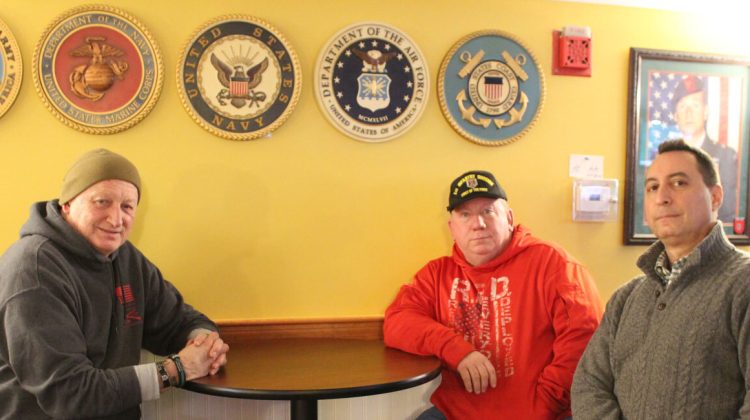
Marblehead veterans say the growing conflict underscores the difficult realities that come with sending troops into combat.
In an interview about the war, retired U.S. Army officer Todd Bajakian reflected on more than three decades of military service and the weight carried by leaders when troops are deployed.
“I just retired over 30 years… My specialty was as a field artillery officer, and I served one-third of my career, the last 10 years, as a command Inspector General,” Bajakian said, describing his background in the Army.
With extensive experience in combat environments, Bajakian said decisions to send troops into war are never easy for those who understand what is at stake.
“As a retired service member who served in combat many times, it’s always difficult when service members are placed in harm’s way,” he said.
He noted that soldiers understand the risks involved in their service.
“We all know the oath that we took. We all know the responsibility that we have, and no one forced anyone to serve,” Bajakian said.
Reflecting on the broader cost of war, he added that military leaders never make those decisions lightly.
“You say freedom isn’t free… but it’s not,” he said. “Sometimes that freedom comes at the cost of our country’s most precious asset — the young men and women who volunteered to support and defend the Constitution against all enemies.”
Bajakian also spoke about the burden carried by commanders responsible for sending troops into combat.
“The most difficult thing for a leader to do at any level is ordering the people we love into a harmful combat situation, knowing that what we love most may not come back,” he said, reflecting on his decades of military experience.
Other veterans expressed a range of views on the escalating conflict.
Doug Knowles, a veteran who served as an M1 tank crewman during the Gulf War, said his first thoughts remain with troops and their families.
“My thoughts and prayers are always going to start with the troops, with their families, and those that are serving in harm’s way,” Knowles said.
While acknowledging the dangers of military action, he said he supports the operation against Iran’s leadership.
“I think this is an evil regime,” Knowles said, referencing Iran’s government. He added that he hopes the conflict could ultimately lead to change for the Iranian people.
“It started back when they had their revolution and overthrew the government and kidnapped all of our hostages in 1979. Iran was one of the greatest countries in the world prior to the revolution, and I hope that the people of Iran seize this opportunity and regain their freedom,” he added.
Ronny Knight, commander of Veterans of Foreign Wars post 2005 and a veteran who served in both the U.S. Army Reserve in Desert Shield and Desert Storm and the Air Force Reserve in Operation Iraqi Freedom and Enduring Freedom for 27 years, said the focus should remain on supporting troops and their families, regardless of political disagreements.
“The biggest focus is the troops and their families,” Knight said.
Knight, who deployed during operations in Iraq and Afghanistan, noted that veterans often view war differently from those who have not served.
“Those of us who have served don’t like war,” he said. “We value peace more than anybody.”
He emphasized that veterans’ organizations like the VFW remain non-partisan and focus primarily on supporting the community.
“We serve a cause higher than self,” Knight said, adding that service members share a bond built through the oath to defend the country.
Despite differing views about the war, Knight said Americans should be able to disagree respectfully.
“This is probably one of the only countries in the world where you can have differing opinions and still respect each other,” he said. “We should all come together to support the troops.”
Moulton criticized remarks and past comments from Trump about military service, saying American service members deserve honesty and respect from their commander-in-chief.
“As our hearts are with the fallen, and doctors tend to the wounded, it’s time to ensure, going forward, that our great young Americans on the front know why they’re risking their lives in this war of choice against Iran,” Moulton said.
Moulton emphasized that Congress had not fulfilled its constitutional responsibility to debate or authorize the conflict before military action began.
“We need Republicans to agree with us that Congress should do its job,” Moulton said. “At least during the Iraq War, Congress had a vote. I disagreed with it, but Congress did its constitutional duty. We’re not even doing our duty here with Iran.”
The congressman said lawmakers are attempting to force a vote on a War Powers Resolution in the coming week, though he stressed that a broader debate about the strategy and purpose of the war should have occurred before combat operations began.
“We need to have a full-on debate about whether or not we should go to war,” he said.
Moulton also raised concerns about the administration’s long-term plan for the conflict, warning that the U.S. risks repeating the mistakes that led to prolonged instability after the Iraq War.
“The question is: What are we doing? What is the strategy?” he asked. “Are we fighting a war of regime change? Are we dismantling a nuclear weapons program? Or are we laying groundwork for a deal?”
He argued that the lack of clarity leaves both the American public and troops deployed in the Middle East uncertain about the mission’s purpose.
As the conflict unfolds, Moulton said his message to service members deployed overseas is straightforward.
“I’m with you, and we are looking out for your interests,” he said. “When you’re asked to put your life on the line for the country, the most fundamental thing you want from your commanders is the truth — be honest about why you’re risking your life.”
He warned that many troops currently deployed in the region may already be questioning the rationale behind the mission.
“I think there are a lot of troops in the Middle East today who must be wondering: Are they lying to us again?” Moulton said.
“The very least that our troops and their families deserve,” he added, “is honesty and respect.”
Emily DeJoy, press secretary for the Marblehead Republican Town Committee, said that the “unfolding events in Iran represent a serious and defining moment for American foreign policy. The United States has both the right and the responsibility to defend its citizens, protect its service members, and safeguard its national interests. When the Iranian regime threatens American lives, supports terrorist organizations, or works to destabilize the Middle East, a firm and decisive response is not escalation for its own sake; it is the fulfillment of our duty.”
DeJoy added that one of the most frequent misconceptions is that “the President lacked the authority to act. Under Article II of the Constitution, the President serves as Commander in Chief and has the authority to respond swiftly to protect American lives and national security when threats are imminent. Presidents of both parties have exercised this authority. Congress retains vital oversight powers and responsibility over sustained military engagement, and continued consultation is important, but the Constitution does not require paralysis in the face of danger.”
She said that another misconception is that “strength undermines diplomacy. In reality, diplomacy without leverage is ineffective. Adversaries come to the negotiating table when they understand that the United States is serious about defending its interests. It is also false to suggest this conflict has no impact on everyday Americans. Instability in the Middle East affects global energy markets, economic conditions, and the safety of Americans at home and abroad. Finally, conservatives are clear that our disagreement is with the Iranian regime, not the Iranian people, many of whom desire freedom and opportunity.”