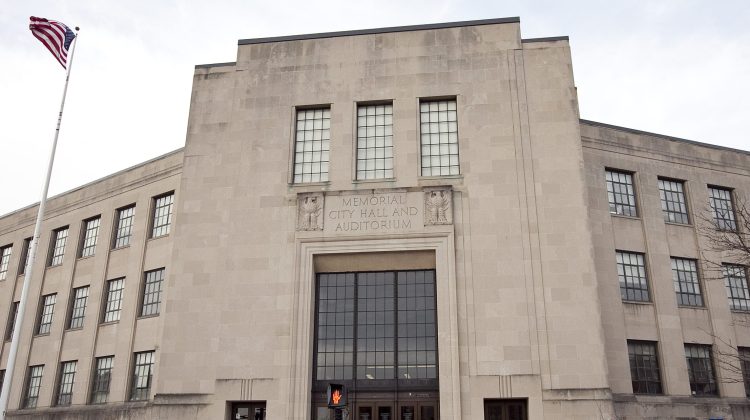
LYNN — The city is moving toward adopting new regulations for tattoo and body art establishments, part of a broader effort by North Shore communities to standardize rules across municipal lines.
During a recent Board of Health meeting, Lynn Public Health Director Lisa Tobin said the proposed rules have been under discussion for some time as the city works with neighboring communities through the North Shore Public Health Collaborative.
“Body art regulations… have been sitting on its agenda for a very long time now,” Tobin said during the meeting.
The collaborative — which includes Lynn along with several nearby municipalities — is working to create a unified set of regulations governing tattoo and body art businesses.
“So if you own a body art shop in Lynn and one in Peabody and one in Salem, you’re dealing with the same regulation in each community versus right now they’re all different,” Tobin said.
Several municipalities in the collaborative have already adopted versions of the regulations, but Tobin said early implementation revealed areas that need adjustment.
“A couple of the communities in the collaborative already adopted their regulations, but as they’ve been enforcing them, they realize that there needs to be some tweaks to it,” Tobin explained. “I just don’t want to adopt it until those tweaks have been made so I can adopt it with the tweaks.”
The regulations would cover a wide range of operational and safety standards for tattoo studios, including artist training requirements, sanitation procedures, facility layout, and recordkeeping. Tobin said the goal is to provide inspectors with a consistent framework when evaluating body art establishments.
“My goal is to get us through by the end of the year to have body art regulations on the books for the inspectors to go out and do their inspections,” she said.
While some shop owners support stronger oversight, others worry that adopting regional standards could limit practices that have long existed in Lynn.
Jeffrey Brito, owner of Hood Ink Tattoo Zoo, said he understands the motivation behind creating consistent regulations across the North Shore, but believes the approach may overlook what makes the city’s tattoo industry unique.
One of Brito’s biggest concerns is a proposal that would eliminate Lynn’s current ability to tattoo minors with parental consent, which is a practice allowed in the city but prohibited in many other municipalities.
“We do under 18 with parental consent,” Brito said, explaining that minors must be accompanied by a parent or guardian and provide documentation such as identification and a birth certificate. “I believe Lynn is one of the only cities in the whole state that can do it, so a lot of people come over here to get it done.”
According to Brito, removing the policy could unintentionally push teenagers toward unsafe environments.
“Kids are still going to get tattoos,” he said. “So they’re going to go to their friend’s house or somebody’s basement, something that’s not sanitary. This is a safe, clean, professional environment.”
Brito also questioned the proposed approach to licensing and apprenticeship requirements. While some shop owners believe apprenticeships should require more hours, he said artistic readiness cannot always be measured by time alone.
“This is art,” he said. “One person could take 500 hours, and they live it, they breathe it. Another person could do 1,000 hours and still not be ready.”
Instead of relying strictly on hour requirements, Brito believes experienced artists should play a larger role in determining when apprentices are prepared for licensing.
“If I’m a master tattoo artist, I should be able to tell when somebody is ready,” he said.
Some of Brito’s concerns also relate to proposed facility requirements, including new rules that would require more sinks inside tattoo studios.
“For every two stations there would have to be a sink,” he said. “But I’ve been tattooing for 18 years, and half the sinks I’ve had installed never even get used. It’s just taking up space.”
Despite his concerns about specific regulations, Brito said he believes stronger communication between city officials and tattoo artists could help create more effective policies.
“I think there should be a mandatory meeting every year where shop owners and artists meet with the city,” he said. “We’re the ones doing the work every day, so we can say what’s working and what isn’t.”
Not all tattoo professionals share the same concerns.
Although Mackako Tattoo Studios faced a rigorous first year with five separate health inspections, owner Amaury Melo viewed the experience positively. He said strict rules and oversight help maintain professionalism in the industry.
For Melo, consistency across North Shore communities is not a major issue. However, he believes apprenticeship standards should be strengthened.
“I feel like now it’s so easy to become a tattoo artist,” said Graeyci Chicas, an employee at Mackako Tattoo Studios. “Apprenticeship should be longer.”
Melo said he believes the industry is shifting away from artistic readiness toward financial motivation.
“It’s no longer artists feeling ready to make art,” Melo said. “They’re ready to make money.”
“There’s a lot of that in Lynn,” Chicas added. “It ruins it for good artists.”
For now, the conversation reflects a broader question facing the industry: how to raise standards without losing the experience and culture that built it.
