
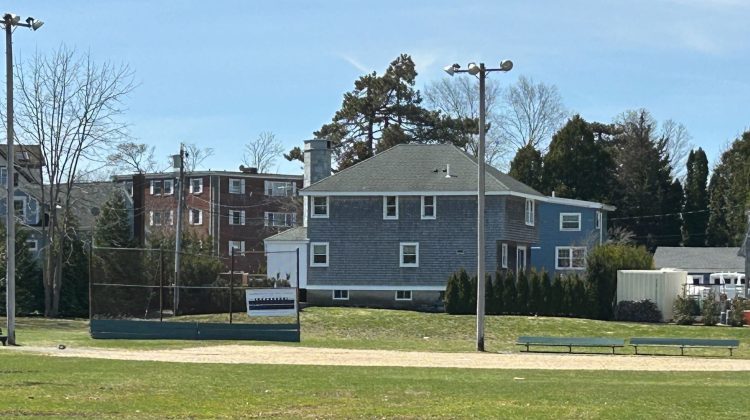
MARBLEHEAD — The Marblehead Recreation and Parks Commission voted 4-1 to move forward with a $3.6 million redevelopment of Reynolds Playground, advancing plans for a new covered ice rink.
The vote sends the first phase of the project — a refrigerated, multi-use sports facility to replace the aging Green Street rink — to the Select Board for review. Larry Simpson cast the one dissenting vote, centered on concerns about including synthetic turf in a later phase of the project.
The decision follows months of public discussion and planning, including a public meeting led by Recreation and Parks Commission Vice Chair Shelly Bedrossian, where she outlined the proposal and responded to community concerns.
“This is actually the eighth public meeting we’ve had,” Bedrossian said during the session, highlighting the length of the planning process.
The approved first phase would transform the existing rink into a covered sports deck that can be used for ice skating in winter and converted into a turf practice surface during warmer months.
Bedrossian said the design reflects a shift from earlier plans for a full-size hockey rink, which were ultimately deemed too costly and impractical for the site.
“We have really, really, really tried to do a full-size ring,” she said, noting that space limitations and costs made that option unfeasible.
Instead, the facility is intended primarily as a practice space, allowing local teams to use it regularly without the added traffic and crowds associated with full-scale games.
While commissioners agreed to move forward with the rink portion of the project, disagreement over the second phase — which includes rebuilding the adjacent field and potentially installing synthetic turf — drove the split vote.
Concerns about turf have been a recurring issue throughout the process, with residents and officials raising questions about environmental impact, health considerations, and long-term costs.
Bedrossian said those decisions will be addressed during future stages of planning, including procurement and design.
Supporters of the project pointed to the growing demand for practice space among local youth sports organizations, which often travel outside Marblehead to Salem, Lynn, and Revere to secure field or ice time.
Families routinely commute to nearby communities for practices, sometimes early in the morning or late at night, due to limited local availability.
Bedrossian said the new facility would help address that gap by providing a dedicated, in-town space for multiple sports, including hockey, lacrosse, and soccer.
Residents have also raised concerns about how the project could affect the surrounding neighborhood, particularly in terms of noise and traffic.
At the public meeting, Bedrossian detailed several measures aimed at minimizing those impacts, including quieter refrigeration systems, sound-reducing barriers, and strategic landscaping.
The project includes multiple layers of noise mitigation, with officials describing how equipment choices and structural design would reduce sound levels.
“It’s better for the neighbors,” she said while discussing adjustments to the system.
Bedrossian also emphasized that the facility’s smaller size and focus on practices — rather than games — would help limit congestion and activity levels compared to a full-scale rink.
A key component of the proposal is a plan to operate the facility without drawing on the town’s general fund.
Instead, Bedrossian said the project would rely on user fees paid by local sports organizations, many of which already pay to rent facilities in neighboring communities.
“We need to be independent and self-sufficient,” she said, outlining the goal of making the project financially self-sustaining over time.
Revenue from rentals would be used to cover operating costs, maintenance, and future replacement of major components, according to project estimates.
With the Commission’s approval, the project’s first phase now moves to the Select Board, which will decide whether to authorize funding and allow the next stage of planning to proceed.
If approved, construction could begin following a procurement process, with officials estimating several months to complete the initial phase.
The second phase — including decisions about turf and field reconstruction — remains under review, with additional analysis and public input expected before final plans are set.
Still, the vote marks a significant step forward for a project that has been under consideration for years.
“We’ve looked at everything,” Bedrossian said.

