
SWAMPSCOTT — Swampscott is continuing to build out its response to substance use by offering a second round of recovery coach training this summer, funded through three towns’ shares of nationwide opioid settlement dollars.
The program, known as Recovery Coach Academy, will run across eight sessions in June and July at the Swampscott Police Department, in partnership with Salem and Marblehead.
The funding comes from a series of nationwide legal settlements with pharmaceutical companies beginning in 2021, following a peak high of opioid related overdoses during the pandemic. The settlement funds have directed billions of dollars to states and municipalities to address the opioid crisis. In Massachusetts, those funds are restricted for use on prevention, treatment, and recovery support.
In Swampscott, officials have used that funding to focus on expanding local access to recovery resources and building support systems within the community, from educating those who are in recovery themselves or supporting a loved one through addiction to offering trainings for professionals in the recovery field.
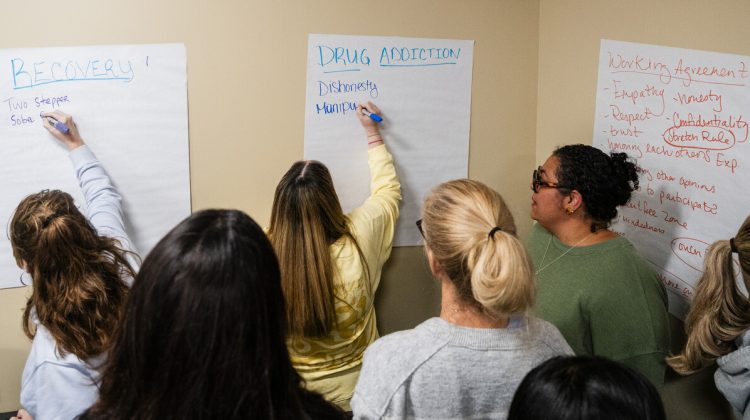
The Recovery Coach Academy is a 60-hour training program spread across eight days in June and July. The training is designed to prepare participants to support individuals who are navigating addiction and recovery. While some attendees work in the field and pursue certification to work as recovery coaches, the program is also open to family members, community members, and professionals seeking to better understand substance use and how to respond to it.
“This is a really helpful way to help people understand addiction from the actual side of people in recovery,” said Michelle Simons, Swampscott’s opioid settlement program coordinator.
Simons, who facilitates the program alongside Tito Rodriguez, said that the training doesn’t just focus on clinical approaches. Rather, it emphasizes lived experience and communication, helping participants feel more comfortable approaching difficult conversations and connecting people to resources.
Swampscott ran the Recovery Coach Academy for the first time last year, drawing 15 participants from communities along the North Shore. Some went on to become recovery coaches, while others applied what they learned to their personal lives, particularly in supporting family members or navigating conversations around substance use.
Simons said participants come in with diverse perspectives, which only adds to the group understanding of addiction and recovery.
“We always get some nice feedback,” she said. “People will reach out a couple months after and say: ‘I’ve been able to talk to my child in a different way,’ and ‘I see things in a different light now.’”
Simons also said she hopes to bring more first responders into the training this time around, including local police and fire departments. She mentioned a local police officer who attended last year’s training, saying that having officers participate can help shape how they respond to people experiencing substance use crises, particularly in moments when they are the first point of contact.
“It was really impactful,” Simons said. “It was really a testament to his work and to just making that change in the way that officers respond to people with substance use disorders … to have a compassionate response and to understand a little bit better.”
For Simons, the goal of the program is to strengthen local networks and make it easier for residents to find and access good help when they need it — whether that is by sharing resources, building community partnerships, or training allies and professionals in the area.
“We’re really hoping to keep building some champions in the community,” she said. “A coach supports multiple pathways of recovery, not just one particular fellowship.”
The upcoming Recovery Coach Academy session has 20 available spots and is open for free to residents or people who work in Swampscott, Salem, or Marblehead.