
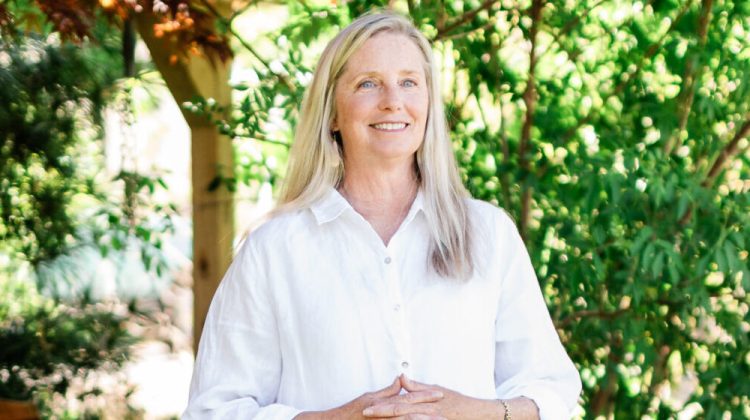
MARBLEHEAD — Megan Sweeney is stepping away from PowerUP after helping transform civic engagement in Marblehead, where the organization pushed residents to challenge long-standing systems, attend public meetings, and participate more actively in local government.
“We set the stage. We created the space,” Sweeney said. “Now you guys go off and continue the work.”
Founded in the early 2020s, PowerUP emerged at a time when uncontested races and limited public participation were common in Marblehead politics. Sweeney said residents often struggled to find contact information for local officials, and public meetings were held entirely in person, limiting who could participate.
Over several years, the organization encouraged residents to run for office, sponsor citizen legislation, and engage in town government beyond election season. Sweeney said one of the group’s biggest accomplishments was changing expectations around civic participation.
“We’ve had 20-some new candidates that ran,” she said. “And now I think it’s more the norm that we do have contested races. But back in 2020, that is not how it was.”
PowerUP also sponsored legislation focused on “diversity, transparency, accessibility, equity, (and) accountability,” while helping residents better understand how local government functions.
Still, Sweeney said the organization’s largest impact may have been cultural.
“I think our biggest impact has been getting people out of the silos,” she said. “We look to build bridges, and we did build bridges, to understand how to work with and next to each other, and focus on what we had in common, rather than our differences.”
As the organization evolved, its work expanded beyond elections and town meetings. PowerUP became involved in conversations surrounding hate incidents, gender violence, and barriers that prevented residents from participating fully in civic life.
In October 2023, Sweeney organized a gathering that brought together town officials, faith leaders, law enforcement, and domestic violence organizations, including Healing Abuse Working for Change, or HAWC. The discussions later helped inspire HAWC’s community ambassador program, where Sweeney continues to volunteer.
“PowerUP was big on starting conversations, opening up dialogue, especially uncomfortable topics around gender violence,” she said. “We introduced the idea to the community that gender violence was actually another obstruction, another barrier to civic engagement.”
Sweeney said her understanding of organizing changed over time. She originally envisioned PowerUP as a smaller organization focused primarily on women and Democratic voters before discovering support across political and ideological lines.
“It’s not them and us,” she said. “It shouldn’t be them and us.”
She said she found support from “men as well as women,” along with Republicans, Democrats, and independents interested in finding common ground.
As political discourse grows more hostile, Sweeney worries about who may decide public service is no longer worth the risk.
“The more ugly that our civic engagement model becomes, the less likely girls and women, non-binary, and marginalized individuals are going to want to serve,” she said. “Because it’s not safe.”
Even as she steps away from leadership, Sweeney said she hopes residents continue attending meetings, speaking publicly and finding new ways to engage in community life.
“Never underestimate the power of your voice,” she said.
She hopes future organizations build on the model PowerUP created, even if they take different forms. She also intends to keep PowerUP’s materials publicly available for organizers who want to continue similar work.
“I wanted people to be able to access it, download it, use it,” she said of the group’s materials and organizing resources. “Take it and make something of it. Do something wonderful with the community.”
Sweeney plans to spend more time volunteering with organizations focused on food insecurity, anti-violence advocacy, and support for vulnerable residents. She said the mission that guided PowerUP will continue to shape her work moving forward.
“Power should come from the people,” she said, “and they are the ones who empower the leaders.”