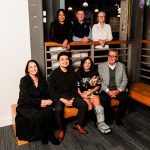

LYNN — For the first time, students from the Marine JROTC program at Lynn English High School joined all of the city’s third-grade students at the Lynn Museum’s “History Detectives” program, taking on leadership roles while helping younger children explore local history through artifacts and storytelling.
The program, which began before the COVID-19 pandemic, brings third-grade students from across Lynn to the museum for an interactive experience focused on curiosity, teamwork, and primary source analysis. This year, the program also received support from an Essex Heritage Foundation grant, which provided snacks and drinks for students during their visit.
For a month, all Lynn Public Schools would take turns sending their third graders to the museum to listen carefully to volunteer docents explain the day’s activities.
The docent team, which is made up largely of retired teachers and community volunteers, guided students through stations featuring historical artifacts from Lynn’s past.
Kristen Tabbaco, one of the program organizers, said the goal is to create a shared educational experience for every child who visits.
“I want every kid to have a common experience,” Tobacco said.
Students were encouraged to “be detectives and look at objects,” as Tobacco described it. Working in groups, children examined artifacts placed in front of them, drew sketches of the items on worksheets, and discussed what they believed each object may have been used for.
In many cases, students were allowed to handle the objects carefully, testing them and passing them around before presenting their final conclusions to the group.
The hands-on approach helps students develop early primary source analysis skills while encouraging discussion and curiosity.
Patricia Lee, one of the volunteer docents, shared stories from her own life to connect students with Lynn’s history.
“I used to know a lady who lived in Lydia’s old house,” Lee told students at one station, referring to Lydia Pickham.
Lee said programs like this matter because they preserve stories that younger generations may otherwise never hear.
“When we get old, we always have these regrets that we didn’t ask our parents or ask the grown-ups these things,” Lee said.
Throughout the museum, students also learned about Lynn’s industrial history, including the city’s famous “ten-footer” shoemaking workshops and the Massachusetts origins of Marshmallow Fluff.
This year also marked the museum’s first partnership with Lynn English Marine JROTC students, including Megan Merida, Julissa Arbaiza, Valeria Sanchez, and Ileana Lopez Chavez.
Some students served as docents while others helped organize student groups, keep stations running on schedule, and assist with translation for multilingual families and children.
Tabbaco said the JROTC students were selected because of their leadership and reliability.
“They are just so reliable, and they make up their work, and they go to school,” Tabbaco said. “Good influence and strong role models.”
Many of the JROTC students said the experience allowed them to challenge negative stereotypes surrounding Lynn while giving back to younger students.
“My reason why I’m here is passing on the legacy,” Chavez explained. “It’s known as the City of Sin, and it’s not that. There’s big programs out there like this that showcase that students actually have potential.”
Another student said participating in the program changed her understanding of Lynn after moving to the city.
“All I heard about Lynn was the reputation,” Arbaiza said. “Coming here and being able to participate in this program and community service, it really shows me the background and history of Lynn that I didn’t know.”
For Brickett Elementary School teacher Ally Kirkpatrick, now in her third year attending the field trip, the museum visit helps students connect classroom lessons to the real world.
“Our curriculum is probably more in-depth, and third grade specifically focuses on Massachusetts,” Kirkpatrick said. “They definitely get excited because we talk about Massachusetts state history all year.”
Kirkpatrick said students become especially engaged when they recognize names and historical figures they have already studied in class.
“When they feel like they understand things like that, they’re naturally curious,” she said.
By the end of the day, the museum’s galleries buzzed with conversation as students compared theories, shared discoveries, and listened to stories from volunteers and JROTC mentors alike, all while learning that history is something meant to be explored together.

Photo: Spenser Hasak | Purchase this photo

Photo: Spenser Hasak | Purchase this photo

Photo: Spenser Hasak | Purchase this photo

Photo: Spenser Hasak | Purchase this photo

Photo: Spenser Hasak | Purchase this photo

Photo: Spenser Hasak | Purchase this photo

Photo: Spenser Hasak | Purchase this photo