
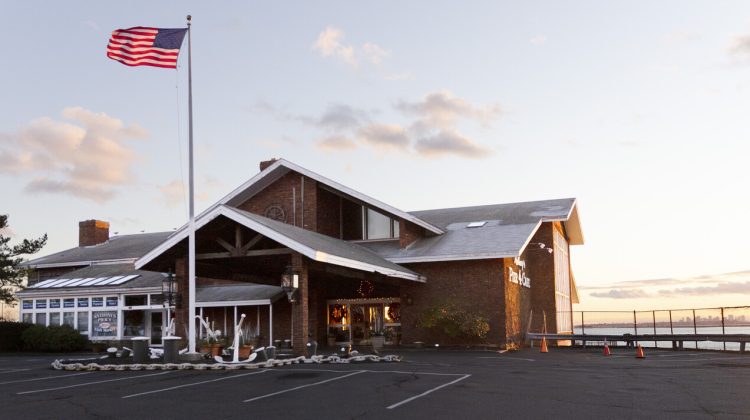
SWAMPSCOTT — The future of the Hawthorne property came into focus this week as officials cemented approvals for its current use and began debating what comes next.
The Select Board unanimously approved an entertainment license for the Swampscott Center for the Performing Arts, ending a review process that spanned three meetings as board members sought clarification on noise, parking, crowd control, and operating plans.
The performing arts center, which is leasing the former Hawthorne-by-the-Sea site through June 2028, plans to host concerts, community events, fundraisers, private functions, and other entertainment programs.
Proprietor Johnny Ray appeared before the board to answer questions raised during previous meetings, particularly concerns from nearby residents about noise.
“We are empathetic to the town’s concerns over noise, crowd control, and parking issues,” Ray said. “Our doors will always be open to comments and suggestions from the community.”
Ray said that on nights when the center hosts ticketed performances, headline acts would typically conclude around 11:30 p.m., with patrons departing by 12:30 a.m. He also told the board that professional sound engineers would be required for performances and said the group had no plans to play music on the building’s outdoor deck spaces.
Board members ultimately approved the license without additional conditions before turning to a conversation about the site’s future beyond the short-term lease.
Town Administrator Nick Connors outlined the framework for developing a request for proposals (RFP) for the waterfront property, using the process used for the Hadley Hotel development as a guiding timeline.
Select Board member Wayne Spritz said he was eager to begin the planning process, but wanted the board to take the time to establish what they actually wanted to accomplish with the space.
“I do want to start this now,” Spritz said. “But I think we have the right balance of time that we don’t have to force ourselves into rushing into decisions, but to be thoughtful about making them.”
Wednesday’s discussion centered on what board members thought the RFP application for the space should include, and whether they would seek specific uses for the space or introduce a scoring rubric for more open-ended proposals with encouraged priorities.
Board members acknowledged that there were a range of issues that an RFP could address, including ownership versus leasing, preservation of open space, parking, environmental sustainability, walkability, the future of the existing building, and how the property could complement nearby commercial development.
Spritz said the performing arts center’s temporary use of the space could provide valuable information as the town continues to weigh long-term options for the site.
“This is a pilot,” Spritz said. “I’m hoping that they succeed … we’re going to find out what the potential is for entertainment of some sort on this property.”
The board also discussed whether residential development should be considered as part of the property’s future.
Planning Board member Angela Ippolito, who was recognized by the board to provide historical context and also served on the Hawthorne Reuse Advisory Committee, said the town’s acquisition of the property was rooted in a desire to prevent residential development at the site.
“The whole reason that we bought the property was to prevent residential development from going there,” Ippolito said. “That was the way it was presented at [Town] Meeting.”
Her remarks prompted a brief exchange with Brian Watson, who served as chair of the Hawthorne Reuse Advisory Committee, who interjected to challenge portions of Ippolito’s characterization.
Watson had spoken earlier in the meeting during public comment and encouraged board members to view the Hawthorne as a potential multi-use space, though at the time of the discussion Select Board Chair Katie Phelan noted that public comment was not open and encouraged any additional information to be submitted separately.
Ultimately, no official decisions were made regarding residential development or any other future use of the property. Board members agreed to continue discussing redevelopment priorities at subsequent meetings as they work toward establishing the criteria that will guide the property’s long-term future.