

LYNN — The murals that decorate the industrial architecture of Central Square were created in partnership between Beyond Walls and local organizations, along with Raw Art Works, in an effort to create a safe and vibrant environment for the city’s residents. The art is created by the community for the community, and represents Lynn’s history as a diverse city of immigrants. Since the start of 2026, Lynn has become home to roughly 38,000 immigrants, contributing to 37.1% of the city’s population.
But, in the months following President Donald Trump’s administration’s militarized immigration enforcement campaign, a large number of Lynn’s residents avoid Central Square.
While more than 80% of Lynn’s population is legally documented residents, its high immigrant population has made this vibrant community a target for Immigration and Customs Enforcement raids. For immigrants and their families, the constant threat of making contact with ICE has become a real and tangible fear.
This fear has deepened as ICE has been given access to other departments’ data, with one example being a Medicaid data-sharing agreement that will allow deportation officials to access undocumented immigrants’ information, including their home addresses. This ruling overwrites a 2013 ICE policy memo that guaranteed agents could not use health care information to track or detain individuals suspected of being in the country unlawfully.
For many, this means being forced to choose between showing up for medical services — like prenatal care, therapy, and doctors’ appointments — or staying home. Lynn is no exception.
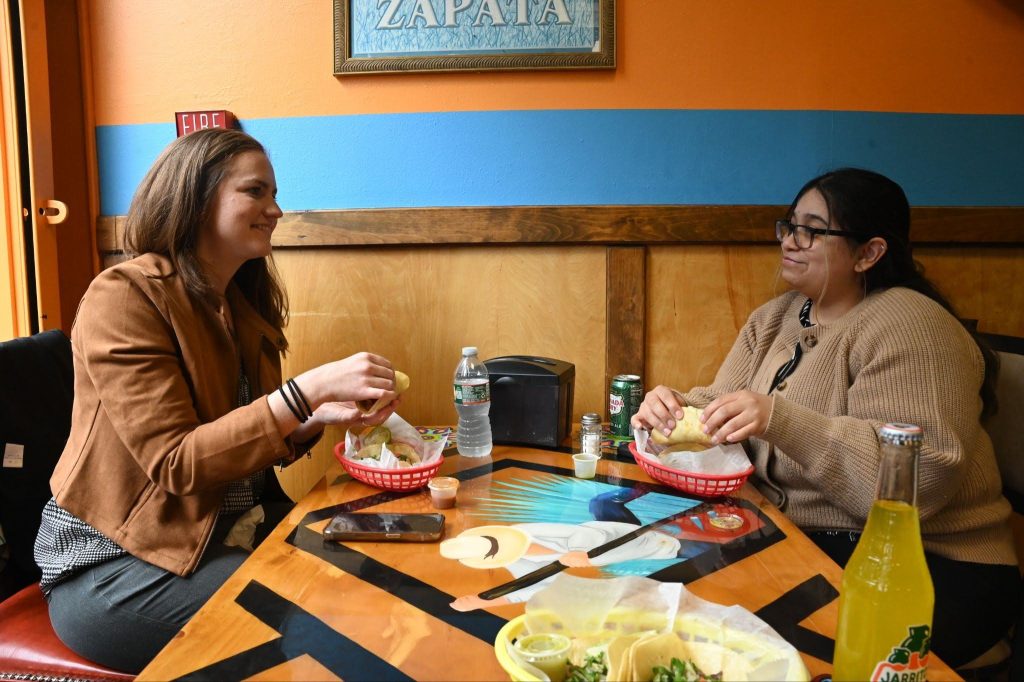
Immigrant-serving agencies like Lynn Rapid Response Network, spearheaded by Bridget Miller and Cindi Flores, are sounding the alarm. Since the Trump administration began ramping up militarized ICE presence and enforcement, Flores noticed that an increasing number of patients referred to her care are expressing fear of leaving their homes for medical or therapeutic care.
“It’s become a bigger barrier. [Immigrants are] contemplating whether or not they want to come, based on if it is absolutely necessary,” said Flores, a therapist and case manager who works directly with immigrant families in the Lynn community.
But for many immigrants, the line between what’s “absolutely necessary” and what’s not worth the risk of contact with ICE is becoming impossible to define.
“We’ve had more of our patients that have not come in for prenatal care for good chunks of the pregnancy. And more lapses in their insurance coverage, which with a pregnancy [being] only 40 weeks long, if you don’t come in for 10 to 12 weeks, you can have a lot that goes wrong,” said a healthcare provider working in Lynn who agreed to speak on the condition of anonymity.
“They show up when they’re ready to deliver and they’re in labor, and then they come to the hospital, and they’ve missed opportunities to do routine labs that could detect HIV or other infectious diseases that we could treat beforehand.”
“There’s a lot of valid fear right now. It’s the reality,” Flores said.
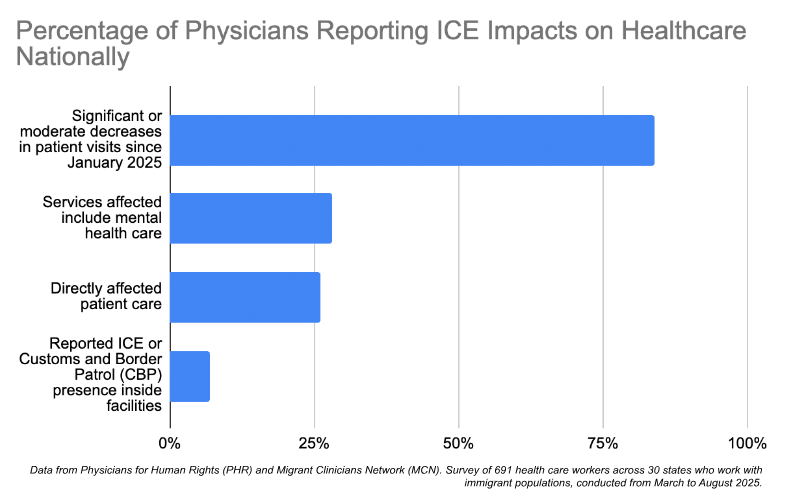
“There’s an increased fear in engaging in any services right now because there’s a lack of trust in what systems are safe to access and what systems are not,” explained Bridget Miller, president of LRRN. “We’ve had people who are disenrolling in insurance because they’re not sure if they can access these services [or] if these services will then impact their immigration status.”
However, across the rest of the greater Boston area, not all immigrant-serving agencies are seeing the same patterns.
Community vs. Private?
Jeff Goldman, a North Shore resident and founding partner and CEO of Goldman & Partners Immigration Law, has specialized in business immigration law regarding visa and permanent residency applications for nearly 30 years. While he said his work has changed dramatically since the Trump administration took over immigration enforcement, he hasn’t noticed an uptick in no-shows at his firm.
“I don’t think ICE is in Lynn right now, and I don’t think they’re focused on looking for these immigrants in Lynn right now — maybe I’m wrong. I think people are so desperate to get on with their lives and to get whatever they need to apply,” Goldman said. “So when they’re applying for asylum and they need a report from their mental health counselor, they’re going if they’re sick. My clients are going to their doctors. I don’t know if they’re showing up in the emergency room, but certainly I think to a health clinic and if they’re sick, they’re going.”
Brenda Pineda, an immigration attorney for Goldman & Partners, found the increased presence of ICE in her client’s legal process to be inconsistent, but not as much of a threat as expressed by the Lynn community agencies.
“As far as I know, my clients have been receiving their medical care regularly without interruption. I haven’t had anyone encounter ICE or receive any sort of information seeking from them after attending their appointments,” Pineda said.
However, during the height of militarized ICE presence in her clients’ neighborhoods, Pineda navigated a very different atmosphere. Immigration agents showed up directly at one of Pineda’s clients’ homes under the guise of a ‘wellness check’.
“They left a note, they said, ‘We’re here to check up on this minor,” Pineda said. However, when Pineda followed up on the note with ICE, they never responded.
Referrals
The network of immigrant services in Massachusetts is built on a referral system, in which lawyers, doctors, judges, and case managers can direct their clients to community organizations for medical and therapeutic care.
However, on the community agency level, referrals from private companies like Goldman & Partners are slipping through the cracks. Many immigrants are pulling themselves out of the loop, for fear of exposing their living or working situations to ICE.
“We’re seeing a lot of referrals coming in from youth being impacted by seeing their parents’ increased fear of what was going on in the community,” Miller, of LRRN, said. “We have a lot of mental health providers who are very aware and trying to get people to access care as much as possible. We’re trying to essentially explain to people what their rights are, and at the same time, that can only do so much when a community is very much marginalized and oppressed by a very powerful government.”
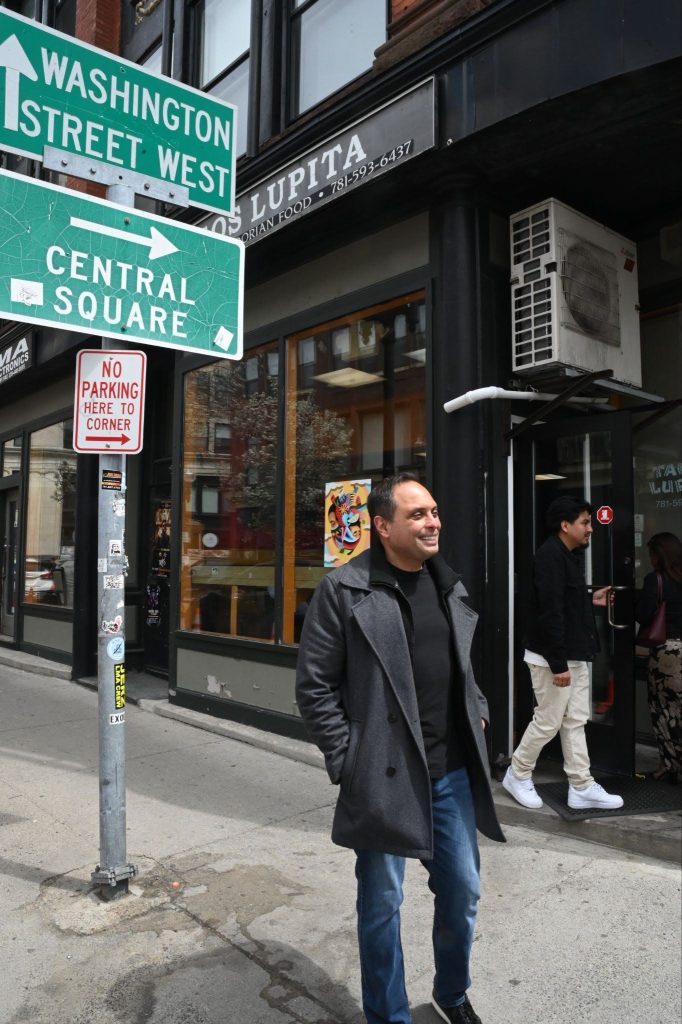
Frank DeVito, Executive Director of the Massachusetts Immigrant Collaborative, oversees the connections between these organizations. Most of these agencies, DeVito said, are “at capacity. Basically, the demand is way beyond the supply.”
“We know that the referrals are going up, but — it’s this kind of weird two-pronged problem — folks are not completing the referral process, because they’re afraid of ICE. And even if they have completed the referral process, there is not enough service capacity to support them,” DeVito explained.
For months, DeVito said, the atmosphere inside immigrant-serving agencies has been “tragically chaotic”.
“That’s been the biggest challenge for a lot of immigrant-serving community partners or organizations, is that things are just changing so fast,” Flores said. “Before you’re able to update yourself on it, it gets changed.”
Fear in the School System
Gil Calderin, Director of Advocacy at Massachusetts Immigrant & Refugee Advocacy Coalition, described how ICE activity in Massachusetts is having a “ripple effect” in the school system.
“Last year, 2,500 students in Framingham stayed home out of fear,” Calderin said in a statement. “Too many immigrants are carrying the constant fear of family separation, and that weight is showing up in their mental health.”
However, Miller explained, it’s not always parents who are afraid to take their children to school.
Listening to a parent support group in Lynn, Miller discovered that it was “the students who are afraid to go to school because they didn’t know if their parents would be there when they got home. I was surprised. The children were expressing fear more than the parents.”
Lynn Public Schools does not track the immigration status of their students, but changes in enrollment and absentee data for Multilingual Learner (ML) individuals provides insight into the scope of these impacts.
“While our overall enrollment is down 3% — which is very significant given that over the last 10 years it’s been going up — our multi-language learner enrollment is down by 6%,” said Dr. Molly Cohen, Superintendent of Lynn Public Schools. “When we look at all chronic absenteeism, 26% of our multilingual students were chronically absent in March. That’s compared to 24.8% of non-multilingual learners.”
Cohen emphasized that Lynn Public Schools is committed to protecting their students’ safety and providing resources for immigration aid. However, Cohen said, there remains an “overall brokenness” between trusting government institutions, and those affected by immigration enforcement.
“The risk is once one institution is untrustworthy, then people are less inclined to feel trust around institutions in general. But part of the system is public education, which is an institution,” Cohen said. “We want families coming to us, looking for support, because we are the liaison to so many resources that students can access.”
And it’s not just students in immigrant or mixed-status households.
“Boston Public Schools does a referral system when a kid needs mental health services, and they have just gone up like 300%,” DeVito said. “And this is in relation to both immigrant students and then also other students who are friends with immigrant students, who are also traumatized by seeing their friends affected.”
“What I really want the public to understand is that the question of fear and anxiety around immigration touches everybody, non-immigrant students as well,” Cohen said. “When you are in an environment where your classmates are either not coming to school, or have anxiety, that creates secondary anxiety.”
“That trauma — that’s generational trauma,” DeVito said. “To fix this is going to take a generation.”
Growing Impacts on Mental Health
Miller and Flores host a coping skills support group for youths in the Lynn community who have lost contact with a parent due to ICE through deportation, detention, or even self-deportation.
While these meetings are run by trained mental health specialists, they also bring together community members like a Lynn local Evangelical minister. The majority of the group’s members are from Latin American families in the area.
In Latin American cultures, Miller explained, mental well-being is intertwined with cultural, social, and spiritual connections. The support group is built on palabras, words of encouragement and support, and relationships of personalismo, the camaraderie of familiar faces.
“The combination of the two, collectivism as well as personalismo, is really required for those who are impacted by the system to feel supported by others in their network,” Miller said.
But left with only one working parent to transport them to the support group meetings, Miller said attending meetings is a struggle for youth members. Switching to Zoom meetings comes with its own issues, forcing the group’s members into a COVID-19 era isolation.
“Essentially, [they’re] either not able to talk about it with anyone, or they’re only able to talk about it with the people who are also carrying that just themselves,” Miller explained. “That in itself enhances that stress exposure.”
Miller explained that many of her clients, due to the mental strain of the immigration process, already suffer from conditions like PTSD, depression, and anxiety disorders. Now, without reliable access to support groups and therapeutic care, Miller worries that those conditions will worsen quickly.
“It’s definitely a two-sided coin,” Miller said. “The need is being expressed through the network even if it’s not directly with providers. We know the need is there, and yet the access to it is different.”
A Broken Network
With the growing disconnect between public, private, and community-centered organizations, referrals and individual needs are getting lost in the cracks. Across the country, the largest barrier to these organizations may be the hardest one to fix — a lack of trust in the system itself.
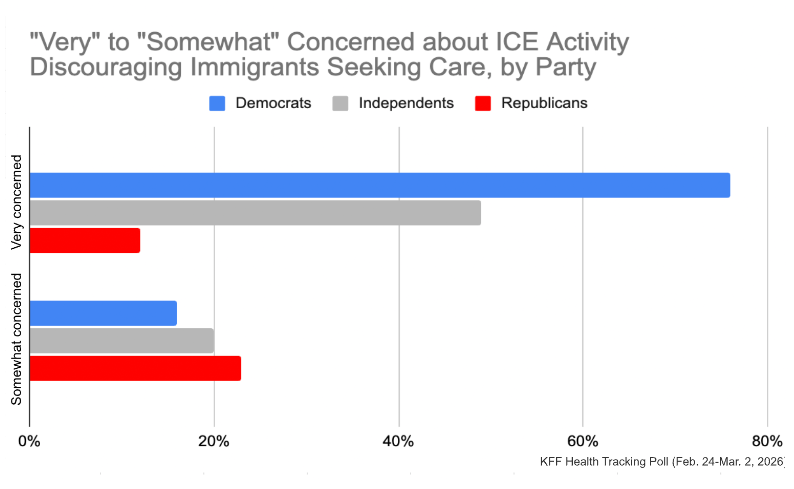
“Families distrust the system. And it does impact them being like, ‘All right, so you gave me this referral, and you said I should do it. But maybe if it’s not absolutely necessary, I don’t feel like I need to access it,’” Flores explained.
“I think the long-term effect is going to be that people aren’t going to trust any of these agencies,” Pineda said. “They have stopped doing the things that they were normally doing just because they’re afraid. I think that in the long run they won’t know whether to continue doing these things.”
Massachusetts is one of the 22 states that are currently suing the federal government in order to prohibit ICE from accessing emergency Medicaid data in their attempts to track suspected undocumented individuals. However, as of March 2026, ICE has continued to use this data and their detainment actions have only escalated.
Laina Gustafson and Noah Coffey are students at Emerson College studying journalism.