
LYNN — Electric candles flickered softly around the hospital room as Abeba prepared to bring her daughter into the world.
For the first-time mother, the experience brought plenty of uncertainty. Medical staff came and went. Decisions had to be made. Questions needed answers.
But seated beside her and her husband, Donovan, was someone whose role was not to deliver medical care, but to help them understand it.
Their doula talked them through options, translated unfamiliar medical jargon, and reminded them that they had a voice in every decision.
“(She) helped us understand we don’t have to say yes to everything that was offered to us, and that was helpful because not having a medical background, it’s hard,” Abeba shared. “If they say, ‘We’re gonna put an IV in you,’ you’re like, ‘OK,’ but not knowing that we should be asking questions like ‘Why do I need an IV?’ or ‘Are there other options?’”
For Abeba and Donovan, that support became one of the most valuable parts of their journey into parenthood. Now, healthcare leaders hope more families will have access to the same experience through an expansion of Mass General’s Birth Partners program.
The program provides free doula services to eligible first-time parents and was originally created to help address disparities in maternal health outcomes among Black birthing people.
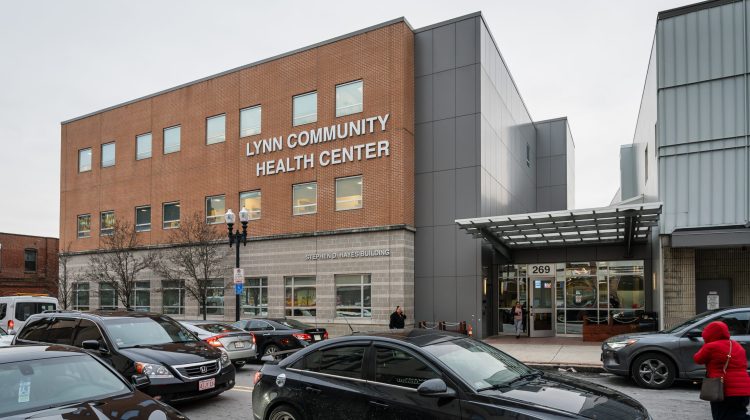
It recently expanded through a partnership with Lynn Community Health Center, where many patients ultimately give birth at Salem Hospital.
“Our system has really been trying to and working toward making more of an investment in supporting the North Shore and the Lynn community,” said Dr. Amaka Onwuzurike, associate medical director for maternal and infant health equity at Mass General Brigham.
According to Onwuzurike, the LCHC subsection of the program does not have race-based criteria, which allows more pregnant patients in Lynn to access doula services.
Birth Partners has operated for years at Massachusetts General Hospital, Brigham and Women’s Hospital, Salem Hospital, and Newton-Wellesley Hospital. The LCHC expansion broadens access to first-time parents receiving prenatal care in Lynn and planning a vaginal birth.
The effort is part of a larger goal of improving maternal health outcomes and reducing disparities in care.
“How do we close the gap there and eliminate the gap?” Onwuzurike asked. “One way we’ve chosen to do that is really to invest in doulas.”
Research has shown that doula support can improve birth experiences and reduce cesarean-section rates. Onwuzurike said Mass General Brigham has seen promising results through Birth Partners, including some years showing a 3% to 5% reduction in C-section rates among participants.
For Abeba, who is Ethiopian, and Donovan, who is Jamaican, enrolling in the program began with a recommendation from family members in healthcare.
Before that conversation, Abeba knew little about doulas. When she was matched with Accompany Doula Care Operations & Program Director Dianna Hahn, however, she immediately felt at ease.
Throughout the pregnancy, Hahn helped the couple prepare for labor, build a birth plan, and understand the choices they might face in the delivery room.
“Because we didn’t have a lot of healthcare experience, we wanted someone who could be in the room advocating for us — or at least helping us, guiding us, so we could advocate for ourselves,” Abeba said.
For Hahn, education is one of the most important parts of the job.
“Education and knowledge is power,” she said. “None of us are expected to be well-versed in the medical terms that you walk into when labor suddenly becomes medicalized in a hospital setting.”
Rather than speaking for patients, Hahn said doulas help families slow down, ask questions, and make informed decisions.
“Birthing isn’t happening to the birthing person. They are giving birth,” Hahn said. “It should be in their power, and they should have some agency over some of those decisions when it’s not an emergency.”
That support extended beyond labor.
After the birth of their daughter, now 9 months old, Abeba struggled with breastfeeding and the challenges common to many new parents.
“There were times where we would FaceTime her at midnight just to be like, ‘Am I doing this right?’” Abeba said. “The fact that she was able to be available and ready at all times was exactly what we needed.”
While doulas have traditionally operated outside formal healthcare systems, organizations like Accompany Doula Care are increasingly collaborating directly with hospitals and healthcare providers.
The nonprofit organization provides doula services across Eastern Massachusetts through partnerships with healthcare systems and believes doula care should be integrated into healthcare rather than treated as a luxury service.
“We work for the family regardless of who is paying us. Our allegiance is to the birthing parent,” Hahn said.
That collaborative approach is one of the reasons Onwuzurike believes the program has been successful.
“Sometimes when we have conversations about maternal health, it’s like: What’s happening in the community level advocacy? What’s happening in the doula space? What’s happening with doctors and midwives? And this is a space where we’ve actually found ways to collaborate, and I think that’s really powerful,” Onwuzurike said.
The Birth Partners program currently serves about 120 pregnant people annually across its four hospitals. The LCHC expansion launched approximately two months ago and has already enrolled about 15 patients.
For Abeba, the value of the program is simple.
“We’re so lucky and grateful to have had this experience because I know not everybody’s experience is the same,” Abeba said. “Especially being minorities, there’s been so many times with my own personal health where I’ve been dismissed by a doctor, provider, somebody, so it was nice to have someone that was full of knowledge and experience, and that could really advocate for us.”
She added, “I hope that they continue the program. I can’t say enough about it. It was amazing.”