
SAUGUS — The Board of Selectmen met Tuesday afternoon to review the town’s sewer rate analysis, which resulted in a 0% increase after a presentation by Matt Abrahams of The Abrahams Group and discussion.
Abrahams first showed the Board the actions it took over the last 10 years regarding sewer rates.
“You can see that for FY26… the rate increase was 5%, just like it was the previous year,” he said.
While FY26 is not yet complete, user charges revenue is projected to be up 6.8% over the prior year.
“Again, there was a 5% increase last year, so that adds a decent amount to that 6.8%, but there’s a little bit more in there. We think about other factors like weather patterns,” said Abrahams, who highlighted the last few dry summers.
The projected expenses for FY26, which are mostly tied to the budget, will be $1.4 million or a 24.6% increase over FY25.
Abrahams said the Lynn Water and Sewer Assessment has had a significant impact on FY26.
“Going into FY26, when we were doing our projections at this time last year, we were assuming that $627,000 would be needed out of retained earnings. In other words, revenues were not going to cover expenses. But in actuality, revenues are covering expenses for FY26, and we’re expecting a small surplus of less than $100,000,” he said.
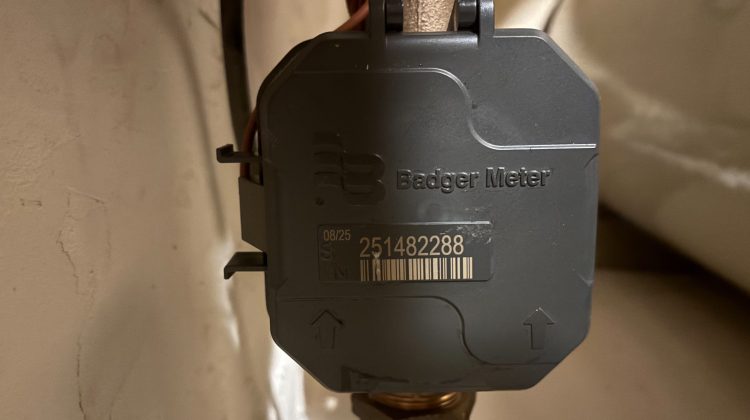
It was also mentioned that the new meters will provide more accurate readings, leading to increased revenue. Town Manager Scott Crabtree also said that people can track the new meters through an app and be notified of spikes.
Multiple selectmen had questions about the new meters, including projected revenue from the switch, and noted a lack of data due to how new the meters are.
“At the end of the day, I just want to know what I should be telling residents as far as expecting the next water bill. Like how much of an increase?” Selectman Frank Federico said.
Selectman Jeff Cicolini stated that it could be zero.
“For me, I have four meters in town … I’m monitoring all of my meters [in my] apartment buildings and my personal residence, and that’s multiple use for people which hasn’t had any changes. So I’m trying to keep an eye on and compare usage to see if there’s a consistency over that period of time,” Cicolini said.
When the focus turned back to Abrahams, he presented the first projection for FY26 retained earnings, which was estimated at $3.3 million by the end of the budget year. However, it now appears that retained earnings will be between $4.6 and $4.7 million.
Abrahams said that the Lynn Water and Sewer Assessment for FY26 was up 33%.
“We knew it was going to happen, but it actually went up at a clip that was greater than what we thought was going to happen,” he said.
Projections showed a large deficit for FY27 to FY31, attributable to factors such as Lynn Water and Sewer and new debt service. Abrahams noted that this was known and prepared for.
At the end of his presentation, Abrahams showed per-bill amounts for FY27, focusing on the average residential user. A 6% increase would be $14 per bill and $28 per year. A 5% increase would be $11 per bill and $22 per year. A 4% increase would be $9 per bill and $18 per year.
“It’s always difficult because nobody wants to go up by rates and with the new water meters that have just gone in, you just don’t know what the impact is going to be, and we have strong retained earnings. With all that said, I’m going back to we need to be responsible, and we don’t want this account to go into deficit,” Chair Debra Panetta said, continuing that she would like to go as low as possible while staying responsible.
Vice Chair Anthony Cogliano said he wasn’t going for any of them, and Federico said he would most likely vote present, as he felt he didn’t have enough time with the packet, which was received Tuesday afternoon, and it was also his first time being part of this analysis.
“I feel like I’d be doing a disservice to any resident who voted for me by voting in favor or against with the hour and a half that I had to review,” Federico said.
Cicolini said they could continue the discussion at another meeting, not wanting Federico to feel rushed. Panetta agreed, not wanting Federico to feel as though he didn’t have the opportunity to review everything.
Federico said he had no issue voting present as there are upcoming scheduling conflicts.
As the Board worked on rescheduling the meeting, Cogliano said the timing did not matter to him because he would not vote on any increase.
“It appears we already have two members that are not comfortable voting for an increase, right? Let’s say hypothetically, worst-case scenario, we put a 0% increase out there on the reasoning because revenues come in $6-$700,000 higher than expected, and we didn’t use the retained earnings that we had budgeted to use last year… If we applied those forward to this year to use with additional usage of retained earnings, the bottom line [is] we’d use about a million one a million two of retained earnings if it was voted no change,” Cicolini said.
He continued that there was currently not a big enough window to see what the new meters would generate.
After a back-and-forth discussion, the motion was made for the 0% increase, which was unanimously agreed upon by the Board.