
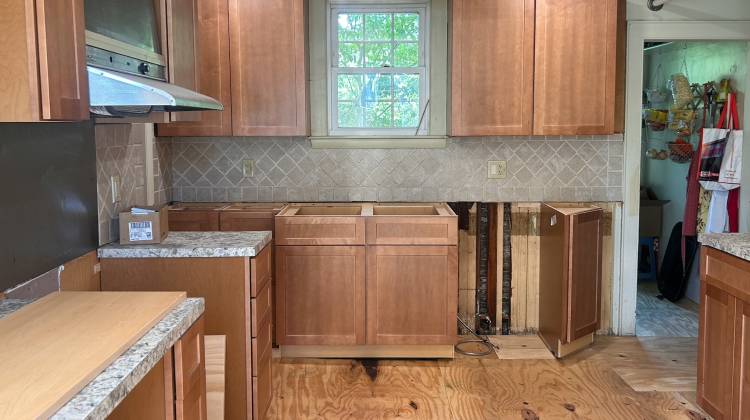
PEABODY — A kitchen renovation at Sutton Home for Women in Peabody is doing more than simply updating old technology and adding more space; it is reminding the women who stay at Sutton that they have not become an afterthought to their community.
The Sutton Home for Women has a history that dates back to the 1800s. While the original Sutton Home for Aging Women was on modern-day Main Street in Peabody, the women who ran the home bought the Abel Proctor house on 7 Sewell Street, where the Sutton Home remains today.
Cheryl Millard, a historian at the Peabody Historical Society and longtime board member for Sutton Home, explained the long history of Sutton and its historical significance for women.
“We’re starting back in the 1800s with women who started a Benevolent Society for the immigrants that came over,” Millard said. “Then, it morphed into doing more for the community women.”
The last record Millard found of this Benevolent Society was in 1998, which she said is a wonderful showcase of the uniquely close ties to the past that Peabody continues to preserve, especially through Sutton Home.
With a kitchen renovation underway that will provide a more spacious area for the Sutton women to host family and friends, the feeling of home continues to be harvested for both the residents and any guest lucky enough to stop in.
“For them, it makes it feel like home,” Millard said. “It’s not an institution.”
Elderly women often feel forgotten in a world that moves so fast, but here at Sutton there is an incredible motive to change that. Not only do the women who operate the home feel a deep sense of care, but the volunteer carpenters who have decided to help in the renovation of their kitchen feel an incredible sense of community action that makes it known to these women they are not forgotten.
“It’s a message of value to the ladies who are here that they don’t just get the secondhand, you know what I mean?” Kate Benashski, director of Sutton Home, said. “They’re important enough to really go out on a limb for.”
Even with something as seemingly small as a kitchen renovation, it is a reminder that the women of Sutton mean something to their community in Peabody.
“One of my issues that I feel very strongly about how older women become invisible,” Benashski said. “So having them visible, going out to the community, having them out in the yard doing yard work doesn’t just make the house pretty; it sends a message that we will not be silent, invisible, and irrelevant. It’s an opportunity to do it in a very natural way.”
Justin Anshewitz, a business manager for the North Atlantic States Regional Council of Carpenters Local 339, along with a fellow union carpenter, spoke to the importance of doing things for the community you live in and providing services that make it a better place for everyone.
“This is our community, so we’re taking time to use our skills and help out that community,” Anshewitz said. “So that we all remember where we come from and hope to have community support when we need help.”
Compared to other elderly homes, Sutton has a sense of community and family that stands out. Neighbors who live on Sewell Street know many of the women by name, and to an extent, the women of Sutton have become a neighborhood watch.
“There’s a family shelter nearby, and we’ve had participants from the family shelter over here,” Benashski said. “It’s like having local grandmas that care about your child; they care about you and have a kind of mentoring function.”
“It’s beautiful how much it helps the people who come over here,” Millard said. “They become a part of the house. It all comes from them walking by and talking. They’re the ambassadors of the street.”
Sutton Home fosters a sense of “dysfunctional family,” as Benashski put it, that provides a warm environment for aging women to comfortably live independently but still getting the help they need as they age with the constant reminder that they matter.