
As communities across the country mark the 250th anniversary of the Declaration of Independence’s adoption on Saturday, many eyes will turn toward Massachusetts, where the fight for independence began.
From answering the alarm at Lexington and Concord to building ships, producing supplies, and sustaining the war effort, the communities that are now Lynn, Lynnfield, Marblehead, Nahant, Peabody, Saugus, and Swampscott each made a lasting impact on the Revolution.
While independence belongs to all Americans, its story is deeply rooted in Massachusetts, where the first battles were fought and ordinary residents helped shape the course of history.
Two and a half centuries later, the North Shore’s role in the Revolution remains a point of pride, reminding visitors and residents alike that history was made here.
LYNN
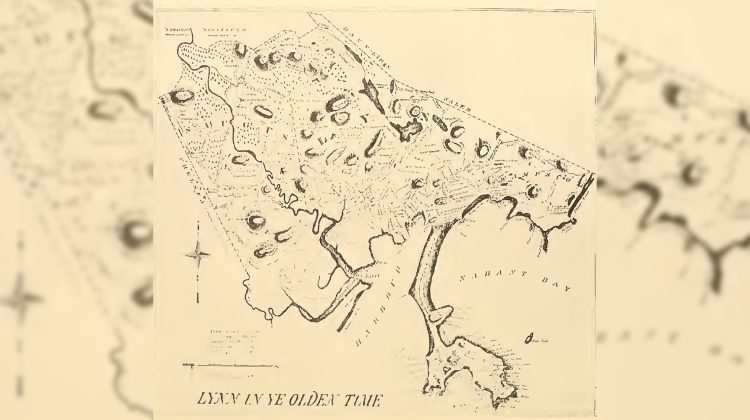
The City of Lynn used to be much larger during the Revolutionary War, when it included the current communities of Lynnfield, Saugus, Swampscott, and Nahant. The region was known as “Saugust” by settlers.
When the Lexington Alarm was received in Lynn on April 19, 1775, Lynn deployed four companies to join in on the fighting. Three of those companies were composed of men who lived in present-day Lynn, led by Captain Rufus Mansfield, Captain Ezra Newhall, and Captain David Parker, and were deployed on foot to fight in the Battles of Lexington and Concord.
Lynn soldiers began their Revolutionary fighting in the Battle of Menotomy, an encounter with retreating British soldiers at the Jason Russell House in present day Arlington. Menotomy is remembered as the single bloodiest engagement on that first day of the Revolutionary War.
Lynn soldiers would go on to fight in the Siege of Boston, many serving in the 5th Massachusetts Regiment led by Lynn’s own Colonel John Mansfield.
Outside of the fighting, Lynn was establishing a name for itself as a major manufacturing hub in the young nation. Colonial Lynn was a primary center of leather tanning and shoemaking. Leather boots made in Lynn were worn by Washington’s army throughout the Revolution.
John Adam Dagyr, a Welsh immigrant to Lynn, pioneered the early assembly line shoe factory around this time by splitting craftsmen up into small “10-footer” shops, breaking the manufacturing sequence into specialized sequential tasks geared toward mass production.
LYNNFIELD
Lynnfield’s storied history is stitched within the very fabric of the American Revolution.
On April 19, 1775, it was three men from Lynnfield —Daniel Townsend, William Flint, and Thomas Hadley — who were among the 38 militia members who marched after hearing word that the British were moving to Concord. Herrick was the one who rang the alarm in Stoneham and Reading before going to the Gowing Tavern. All of the men then gathered on Summer Street near Parsons Avenue before marching to the Old Meeting House.
They died in battle in Menotomy, now Arlington, but their heroic efforts were crucial at the start of the Revolutionary War. More than a year later, on July 17, 1776, a copy of the Declaration was delivered to the village of Lynn-End (which today is Lynnfield), and it was read on the Common, most likely in the Meeting House, by Rev. Benjamin Adams. The public reading was part of a general order by the Massachusetts Provincial Council which ordered that copies had to be delivered to every minister in every parish and read to all.
The town continues to honor this history with readings and performances by the Lynnfield Historical Society and more.
MARBLEHEAD
Marblehead was an integral part of America’s independence due to its long history as a maritime economy.
Many Marbleheaders know about Jeremiah Lee and his beautifully restored mansion, courtesy of the Marblehead Museum, but may not know the entire history and how important it was to the American Revolution.
Marblehead was settled in 1629, making it 377 years old. Because of its maritime and fishermen-run economy, Marblehead was incredibly significant to winning the Revolutionary War and is recognized by scholars as the forerunners to the United States Navy.
Many Marblehead men joined the fight for Independence early. “Hannah” was the first vessel commissioned for the naval fleet and was used by none other than John Glover and his soldiers.
This Glover-led militia would become the 14th Continental Regiment — also known as Glover’s Regiment, a diverse group of seafaring soldiers who famously helped George Washington cross the Delaware River in December of 1776.
This was an integral moment in the Revolutionary War that would help Washington and his militia win the Battle of Trenton. Glover’s Regiment was disbanded on Dec. 31, 1776, in Pennsylvania.
Marblehead is still honoring that history 250 years later and ensuring the sacrifices made by Glover and his regiment to bring America its independence were not made in vain.
NAHANT
Formerly part of the City of Lynn through the Revolutionary War period and until its incorporation in 1853, Nahant was sparsely settled and recognized for its coast, which was being used as planting and cattle grazing areas for Lynn residents.
Early colonists used Nahant point as a cattle herding ground at low tide, with the ocean acting as a natural fence for livestock.
Throughout the war, the Nahant peninsula was a critical strategic area for naval forces from both the Royal and Continental Navies. Leading up to the war, the Nahant Point was designated in the New England Restraining Act as the northern boundary of the prohibited zone in which colonists were forbidden to fish or engage in naval trade. The peninsula was then used as a geographical landmark for the Royal Navy during the 1775 Siege of Boston, guiding British ships toward Boston Harbor.
Before the year 1800, there were only three permanent homes existing on the peninsula. One was the Breed family house, now known as the Whitney Homestead, which was operated in the 1770s as an inn. The Nahant Historical Society has a preserved guestbook which boasts five U.S. presidents, Harriet Beecher Stowe, Henry Wadsworth Longfellow, and Charles Dickens.
In the later 18th century, William Tudor — who served as a confidante for Washington and a Judge Advocate General in the Continental Army — owned land in Nahant. That land was passed down to his son Frederic, a successful ice merchant known as “The Ice King.” The house that Frederic would build on that property is today a part of the Nahant Country Club Estate.
PEABODY
Although Peabody was known as South Danvers during the Revolutionary War, the community played a significant role in the fight for American independence.
One of the city’s most important landmarks was the original Bell Inn & Tavern, located at 2 Washington St., built in 1757. Serving as a gathering place for travelers and local residents, the tavern also became a meeting point for the area’s militia as tensions with Great Britain escalated.
On April 19, 1775, the day the American Revolution began, local militia met outside of the Bell Inn & Tavern before marching 16 miles to Lexington and Concord. After about four hours on the road, they reached the village of Menotomy, now Arlington, and were faced with retreating British soldiers in what became one of the bloodiest engagements of the day.
Seven men from Peabody lost their lives in the Battle of Menotomy: Samuel Cook, 33; Benjamin Daland, 25; Ebenezer Goldthwaite, 22; Henry Jacobs, 22; Perley Putnam, 21; George Southwick, 25; and Jotham Webb, 22.
Today, the Lexington Monument at the corner of Washington Street and Sewall Street commemorates their sacrifice and serves as a lasting reminder of the community’s contribution to the nation’s founding.
SAUGUS
Saugus was still part of “the town of Lynn” during the Revolutionary War, but many of the men who marched to Lexington and Concord 250 years ago were from what is now considered Saugus.
Parson Joseph Roby, who was later declared “Fightin’ Parson,” was the leader of the Third Parish Church, and 62 men along with Roby would join Capt. David Parker for battle. The group would grow later, nearly hitting 100 men from the Saugus section of Lynn.
In a book written by Horace H. Atherton Jr. in 1915 called “History of Saugus, Massachusetts,” he named all the men who fought “from Saugus.” Many last names are recognizable today, such as Roby, Stocker, and Newhall. The list mentioned 99 names.
Some of these men, including Roby, are now buried in Saugus’ Revolutionary War Cemetery.
“These were Saugus men, and the ashes of some of them rest sacredly in our keeping in the old burying ground at Saugus Centre,” Atherton wrote.
An 1860 sketch from the Lynn Reporter cites the Third Parish and Capt. Parker mustering up his company to fight at Concord.
Saugus was also the site where Maj. Samuel Appleton of Ipswich would give a passionate speech denouncing then-governor Edmund Andros, a dedicated royalist who served King Charles II and King James II. Though it was delivered before the war, the speech is said to have touched on several ideas that would later be included in the Declaration of Independence.
SWAMPSCOTT
Though the nation is officially older than Swampscott — which remained part of Lynn until its incorporation in 1852 — the community’s roots stretch well into the colonial era.
Many Swampscotters joined the Continental Army. Among those heroes are names still recognizable in Swampscott today — six Burrills, five Ingalls, and three Ramsdells, including Abednego Ramsdell: the first “Lynn” soldier to lose his life in the war at the Battle of Menotomy who is now honored with a monument at the intersection of Cherry and Essex streets.
The Burrills — who, it should be noted, were slave owners — owned the historic Humphrey House for most of the 18th century. Samuel Burrill lived there with his two sons, Alden and Ebenezer, who both fought in the war. The house, originally built sometime in the 1600s, is now located on Paradise Road. It has been preserved and operated by the Swampscott Historical Society.
Some of these Swampscott soldiers likely fought with General John Glover’s famed Marblehead Regiment (after all, who but a group of strong North Shore mariners could lead George Washington over the Delaware River in 1776?).
Not all natives to the area, though, were down with the Revolutionary cause. The John Glover House was owned in the early days of the Revolution by William Browne: a somewhat reluctant Loyalist who is said to have lost his post in the British Massachusetts government due to his colonist sympathies.
During the Revolutionary Era, Swampscott was still making a name for itself as a hotspot in the fishing industry. It was around this time when local merchants like Ebenezer Phillips — one of the country’s first millionaires — learned the process of drying fish from members of the Naumkeak tribe: the group from which Swampscott likely gets its name from the Naumkeak “land of the Red Rock.”