The Massachusetts Department of Environmental Protection (MassDEP) issued an air quality warning, citing unhealthy conditions for sensitive groups, in effect until midnight on Thursday.
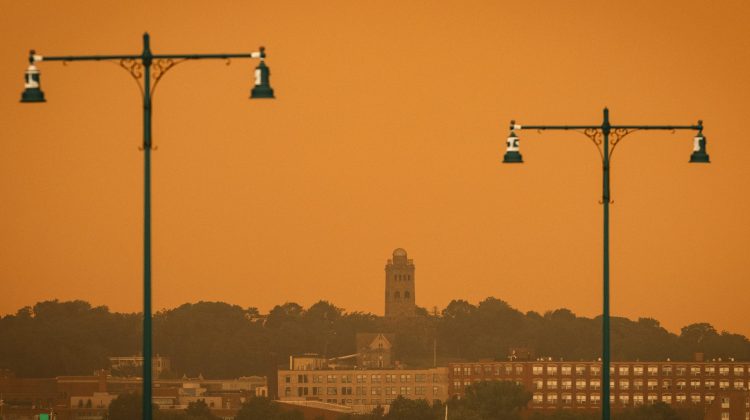
MassDEP issued the warning due to elevated levels of fine particles, known as PM2.5, which are 2.5 micrometers or less in diameter. The region was also impacted by a deep orange hue and the smell of smoke on Wednesday.
“Air quality statewide is expected to be unhealthy for sensitive groups. Sensitive groups include people with heart or lung disease, such as asthma, older adults, children, teenagers, and people who are active outdoors. People with either lung disease or heart disease are at greater risk from exposure to air pollution,” the warning read.
MassDEP recommends people in sensitive groups reduce “prolonged or heavy outdoor exertion, take more breaks, do less intense activities, follow asthma action plans, and keep quick-relief medicine handy. Watch for symptoms such as coughing or shortness of breath.”
MassDEP tracks air quality throughout the state, measuring air quality on an Air Quality Index, between zero and 300. As of presstime, Lynn’s Air Quality Index was 110.
The range of 101-150 is considered unhealthy for sensitive groups.
Marblehead Board of Health Member, Dr. Amanda Ritvo, said that children are especially vulnerable “because their lungs are still developing, and they breathe more air relative to their body size than adults. During the summer, many children naturally spend more time playing sports, attending camp, and being active outdoors, which we generally want to encourage.
“However, during periods of poor air quality, increased exposure can trigger coughing, wheezing, asthma flare-ups, and reduced exercise tolerance. On days with elevated pollution, it’s best to limit prolonged vigorous outdoor activities, particularly for children with asthma or other underlying respiratory conditions,” she said.
She said, “The biggest health concerns involve the lungs and heart, but smoke and air pollution can also irritate the skin, particularly in people with eczema or sensitive skin. Some may notice dryness, itching, or redness after spending time outdoors.”
Ritvo said the best treatment is to limit exposure.
“Stay indoors with windows closed when possible, use air conditioning on recirculate or a HEPA air purifier if available, stay hydrated, and avoid strenuous outdoor activity until air quality improves. People with asthma should continue their prescribed medications and have a rescue inhaler available. Anyone experiencing severe shortness of breath, chest pain, or worsening symptoms should seek prompt medical attention. Checking the daily AQI on MassAir Online can help residents make informed decisions about outdoor activities,” Ritvo said.
In Peabody, Sharon Cameron, Director of Health, said the city is monitoring the air quality through sensors purchased through a MassDEP grant. The sensors measure particulate 2.5, which “is the particulate of concern for people who might be experiencing respiratory issues.”
She said the levels of particulate in the air “really do support the DEP statement that we are experiencing high levels of small particulates in this area, and that people who do have existing respiratory issues or other sensitivities, and they list many of them. People with lung disease, such as asthma. People should be aware of those elevations and take appropriate precautions.”
In Saugus, Town Manager Scott Crabtree urged residents to take precautions in a statement. He also announced that an emergency shelter would be activated at the Saugus Senior Center if needed.
According to the National Weather Service, hazy conditions will continue in the area until Thursday. With widespread haze before 10 p.m. on Wednesday and patchy smoke after 11 a.m. on Thursday.