From the summer of my 14th birthday, the idea of a losing baseball season in Boston has been completely unacceptable.
Though I love summer and will extract every second I can out of it, that doesn’t necessarily apply to the Boston Red Sox. Summer drags when the team is losing.
The summer I turned 14 was 1967 — the Impossible Dream season when the Red Sox came out of nowhere and won the American League pennant in a scintillating four-team race (none of which were the New York Yankees, believe it or not).
One of the major contributing factors that season was a 10-game winning streak just before the All-Star break.
Prior to that, the last winning season the Red Sox had was in 1958 (79-75). I turned 5 that August and barely knew what a baseball was. By the time I got into the sport, the Red Sox were cellar dwellers, right down there with the Washington Senators (first in war, first in peace, last in the American League) and the Kansas City Athletics.
In 1965, just two years before the Impossible Dream, the Red Sox lost 100 games. Can you imagine? The team with a legacy of Ted, “Double X,” Joe Cronin, Johnny Pesky, and Bobby Doerr lost 100 games.
But General Manager Dick O’Connell was quietly signing real, young Major League talent and letting it develop. Players like Tony Conigliaro, Rico Petrocelli, George Scott, Reggie Smith, Dalton Jones, and Mike Andrews joined Carl Yastrzemski on the roster. They blossomed in ’67 and took the vastly superior St. Louis Cardinals to seven games in the World Series.
All I remember is how excited I became about the Red Sox. I’d wait breathlessly for my father to hand me the sports page over breakfast so I could read the game stories. If the Sox played on the West Coast, and the scores weren’t in the edition of the sports page on my breakfast table, I’d sulk until I found out. I became obsessed that summer.
I also saw more than my share of day games, most of them obtained during walk-up sales for the bleachers. I read so many subway maps that summer I memorized all the lines and what their connecting points were. Not only did I fall in love with the Sox, I fell in love with Boston (a love I have never lost).
Needless to say, Fenway’s not the same. For one thing, walk-up tickets are tough to come by as the park is almost always full. There have been four world championships this century and fans may be just a wee bit entitled. I guess I should include myself here, because there I was during April, May, and June kvetching, sulking, and calling the Sox unprintable names as loss piled upon loss.
As in the recent past, my targets were Trevor Story first and everyone else after that. And forget about current GM Craig Breslow. The sooner they get rid of him, the better, I’d say to no one in particular.
I’d just about accepted my cruel fate of loserdom. Nothing was working, except for the pitching. Then it was, “gee, too bad we get Sonny Gray this season, when the team is pathetic.” Seriously. The entire roster was full of Mendoza rejects.
I don’t know what happened this month, though. All of a sudden, everything works. Caleb Durbin has turned into Rod Carew after hitting about a buck-fifty through May. Willson Contreras is the home-run hitter they thought they didn’t have. Wilyer Abreu has stepped up in the power department. Interim manager Chad Tracy actually has them playing small ball.
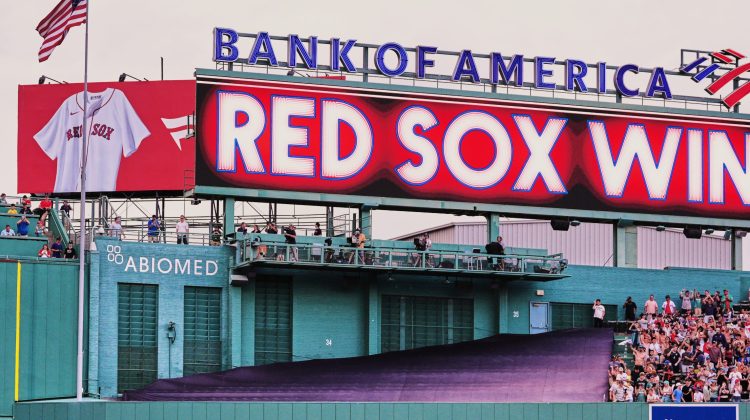
A severely patchwork pitching staff has held up, so the team doesn’t have to score 12 runs a game. And suddenly, it has the capability to score enough runs to complement that pitching staff. And that’s what gets you a 15-game winning streak (as of Wednesday night). And summer, for me, is right where I want it to be.
The Red Sox, of course, won’t go through the rest of the summer without losing. And that, too, presents problems because once the dam breaks on something like this, you find out how good you really are.
I’d say good enough to stay where they are and not sink back into the miserable morass they’d been in for three months.
For the sake of my summer, I hope so.