
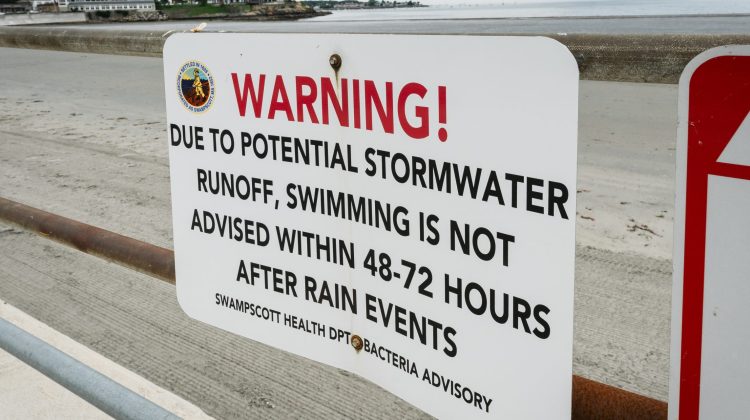
SWAMPSCOTT — Residents can now view the town’s own beach water-quality testing results online as the Board of Health continues working to make information about local swimming conditions more accessible and comprehensible for local residents and beachgoers.
During Thursday’s meeting, board members reviewed updates to the town’s beach water-testing webpage, which now includes results from the town’s expanded monitoring program at Fisherman’s Beach. The board also discussed several additional improvements to the data table to come, including color-coding elevated bacteria readings, adding maps showing sampling locations, and posting more detailed testing data for residents who want a more detailed look at the numbers.
The town began conducting daily testing at Fisherman’s Beach earlier this summer to supplement the Massachusetts Department of Public Health’s weekly testing program. While Public Health Director Jeffrey Vaughan continues state-sponsored testing at all six of Swampscott’s beaches on Wednesdays, the town’s additional sampling is intended to provide more timely information for residents, particularly after rain events that can affect water quality.
Board members said making the data readily available online is an important part of keeping residents informed.
“That’s what parents want when they’re sending their kids to the beach,” Wayne Spritz, Select Board liaison to the Board of Health, said.
While Allen pointed out that testing results are not posted or available until 24 hours after a sample is collected, he said the ability to show data online might help residents make informed decisions about entering the water.
Spritz and board members also suggested adding a map to show where samples are collected. Allen said he is also working with the town to highlight bacteria exceedances in red so residents can more easily distinguish between routine results and readings that exceed state swimming standards. Board members agreed that those changes would make the information easier to interpret while preserving access to the more detailed spreadsheets for residents interested in the underlying data.
The discussion follows several weeks of fluctuating bacteria readings at local beaches, particularly after significant rainstorms. In recent weeks, the board has been trying to define a “significant rainstorm,” one that might trigger a beach posting even before sample results are available.
“I think because we haven’t had any definitive data or causality to say something, we’ve been erring on this message that we know there are spikes when there are significant rain events,” Board Chair Gargi Cooper said. “I don’t think we know the exact inches of rain that could cause an event … I don’t think we can predict it.”
Allen noted that while heavy rain often leads to elevated bacteria levels, the relationship is far from predictable. He pointed to one recent “gullywasher” — his term for a torrential downpour — that produced high bacteria readings, while other storms of similar magnitude had little effect. Conversely, the board also discussed isolated spikes that occurred on otherwise dry days, underscoring the challenge of predicting water quality based on weather alone.
Members discussed ways to improve public awareness beyond the testing webpage. During the meeting, Allen shared a photo of residents in the water behind the town’s red flag warning of unsafe bacteria levels — prompting a discussion about what barriers might be in place to communicate public health concerns to local beachgoers.
Suggestions included placing a more prominent beach water-testing link on the town’s homepage, adding QR codes to beach signs that direct visitors to multilingual information, and making better use of existing town communication tools during periods of poor water quality.
The board is also considering hosting a public forum later this summer, bringing together town officials, water and sewer representatives, and community advocates to review beach water-quality data, discuss ongoing infrastructure projects, and answer residents’ questions about a variety of public-health-related issues.
“I think people do want some answers on the updates of the beaches and where we’re at,” Cooper said. “Because it’s very confusing to follow.”